Buscar en toda la estación

Accesorios: Batería del vehículo scooter eléctrico Bio

Pin Mills

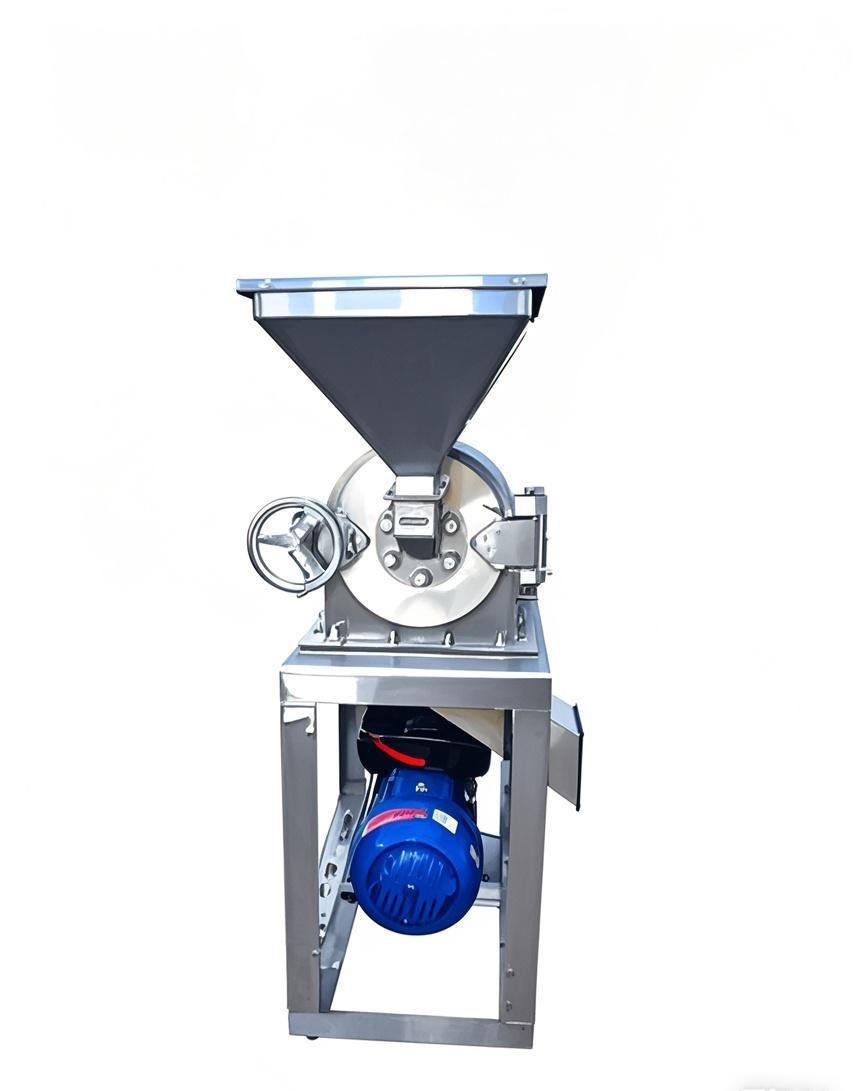
A pin mill is a type of high-speed grinding machine used to reduce materials into fine or ultra-fine powder.
  • model200-1000
  • Potencia2,2 kW-30 kW
  • Weight85kg-550kg
  • Yield50kg-1200kg(according to the machine model)
  • Dimensiones1200mm×850mm×1260mm(Customizable)

What is a pin mill?

pin mill is a type of industrial grinding machine that uses high-speed rotating discs fitted with rows of intermeshing pins to reduce materials into fine powders through repeated impact and shearing

It works by using two discs fitted with multiple pins—one rotating at high speed and the other stationary or counter-rotating. When material enters the grinding chamber, it is broken down by impact and shear forces generated between the pins.

Pin mills are widely used because they offer:Uniform particle size;High grinding efficiency;Low heat generation;Continuous operation

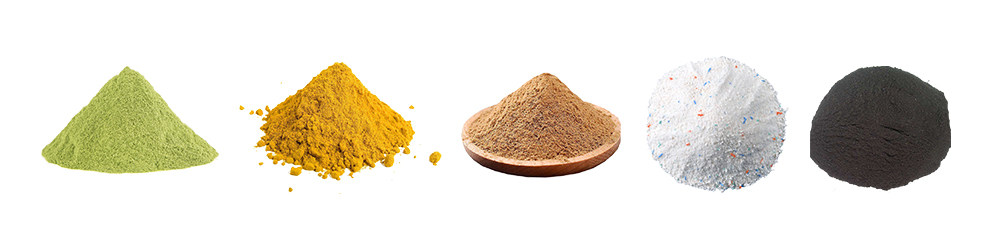
They are commonly applied in the food, pharmaceutical, chemical, and mineral industries, especially for materials such as spices, sugar, salt, chemicals, and powders that require precise fineness control.
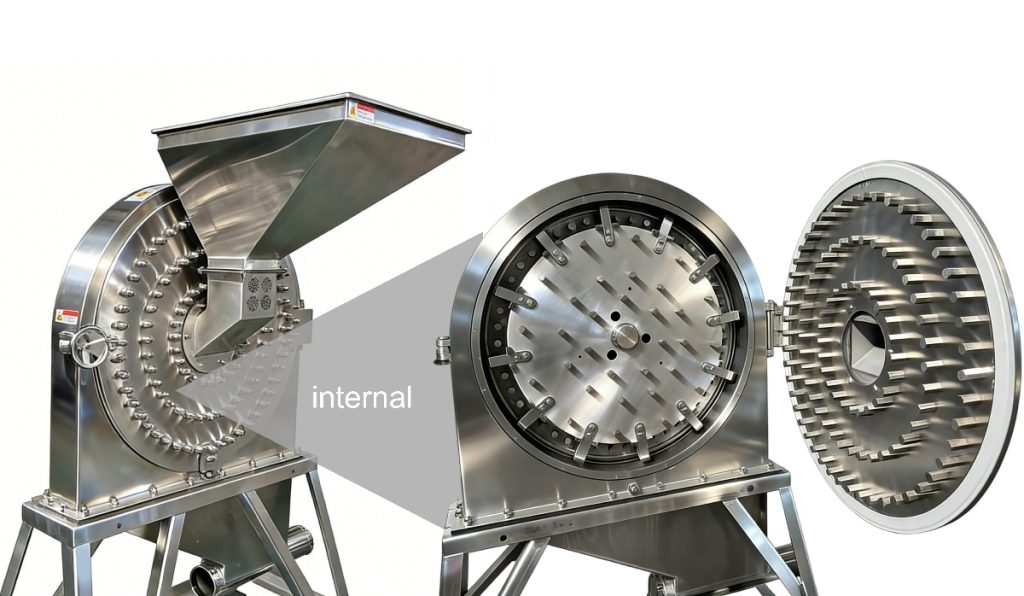
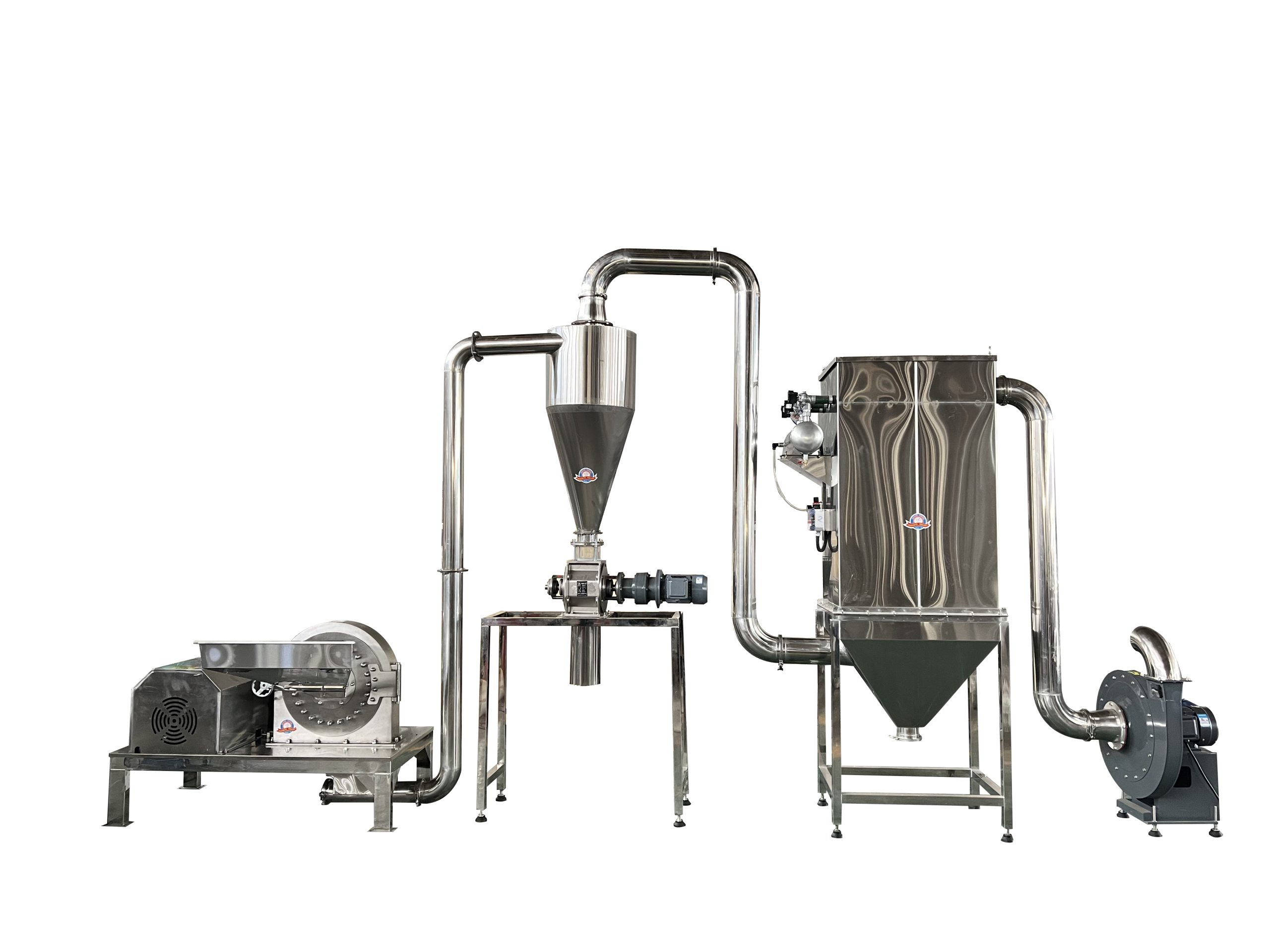
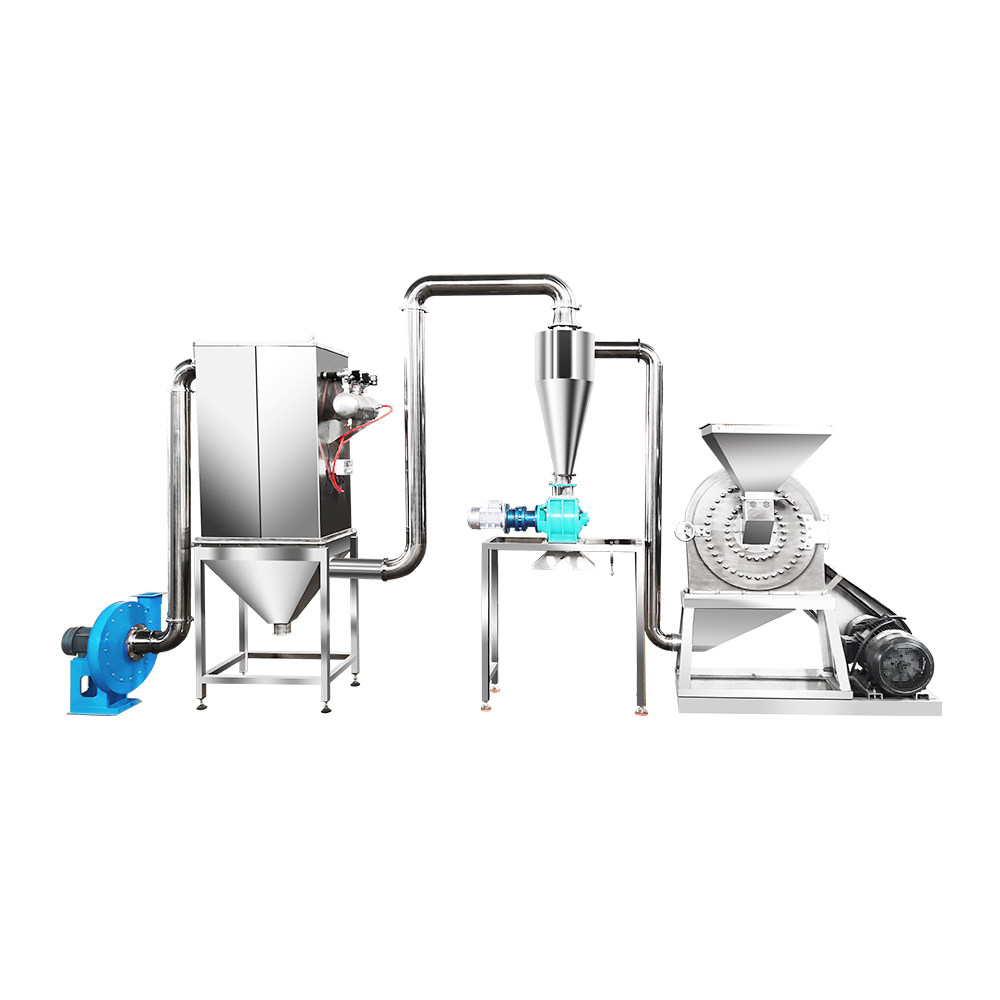
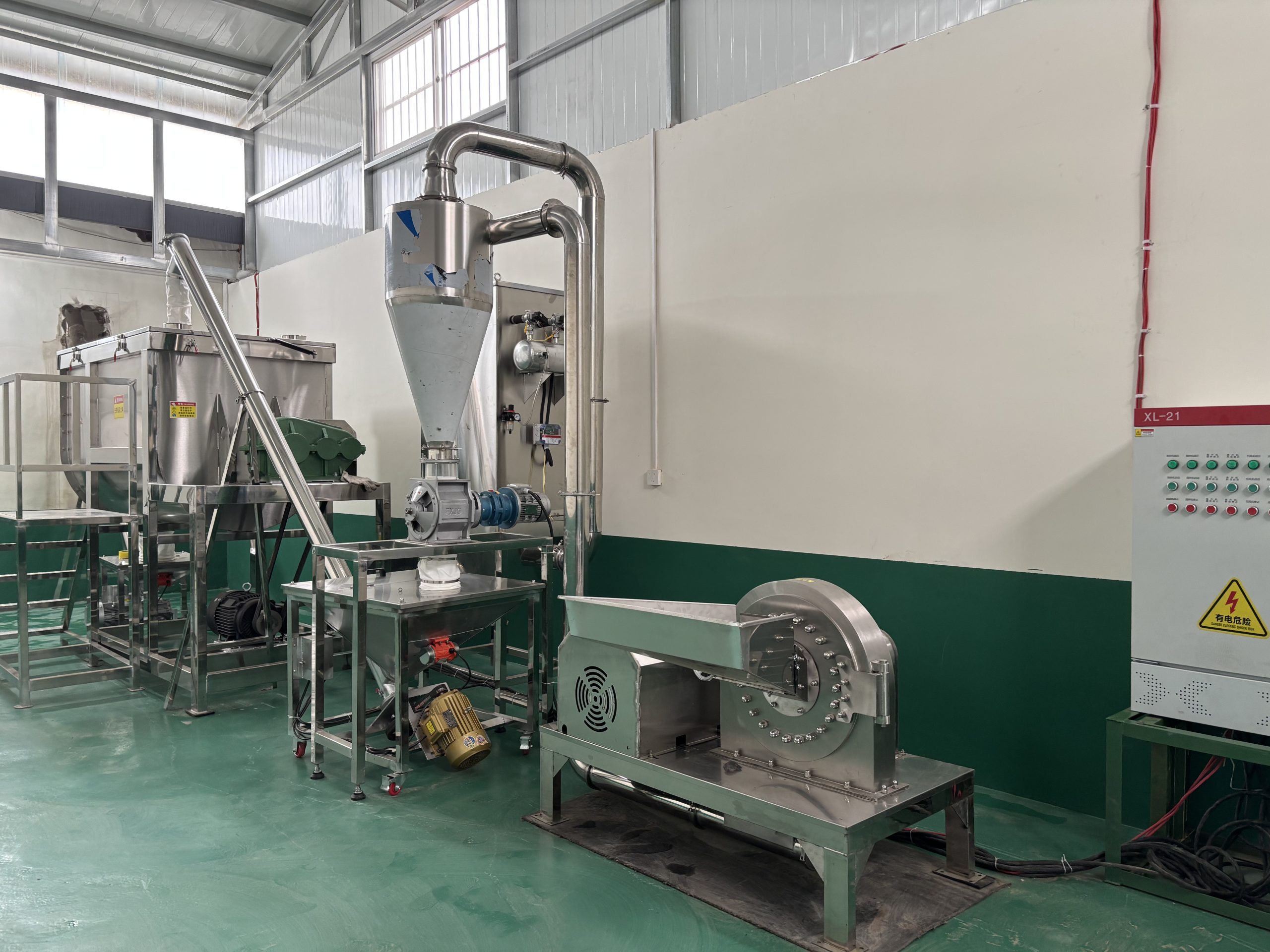
A stainless steel pin mill with a pulse dust collector is a production-scale grinding system that combines a hygienic grinding chamber and an on-board filtration unit. The pin mill reduces bulk solids into fine powder; the pulse dust collector captures airborne fines and automatically cleans its filter media with short bursts (“pulses”) of compressed air. The result is controlled dust emission, stable output and easier compliance with food/pharma hygiene standards.

Why choose stainless steel for the pin mill ?

Stainless steel (commonly 304 or 316L) is chosen for several practical reasons:

  • corrosion resistance and chemical inertness — important for food, spice, and pharmaceutical powders;
  • smooth surfaces that are easy to clean and sanitize (reduces cross-contamination risk);
  • durability under repetitive mechanical stress and abrasion when processing non-extreme abrasives;
  • regulatory compatibility for GMP, HACCP and similar hygiene frameworks when food or pharma quality is required.

How to adjust the output fineness of a pin mill?

The output fineness of our pin mills is primarily and precisely controlled by replacing screen meshes with different aperture sizes. The screen is installed at the outlet of the grinding chamber, allowing only particles smaller than the mesh openings to pass through. We offer a range of screens from 10 mesh to 120 mesh (and finer), enabling customers to easily switch between screens based on the particle size requirements of their final product. This simple and reliable mechanical sieving method ensures stable and controllable adjustment of output fineness.

1. Standalone pin mill (stainless steel body)

  • Compact footprint, simpler to operate, suitable for small-batch or laboratory use.
  • Requires a separate dust-management solution if dust control is required.

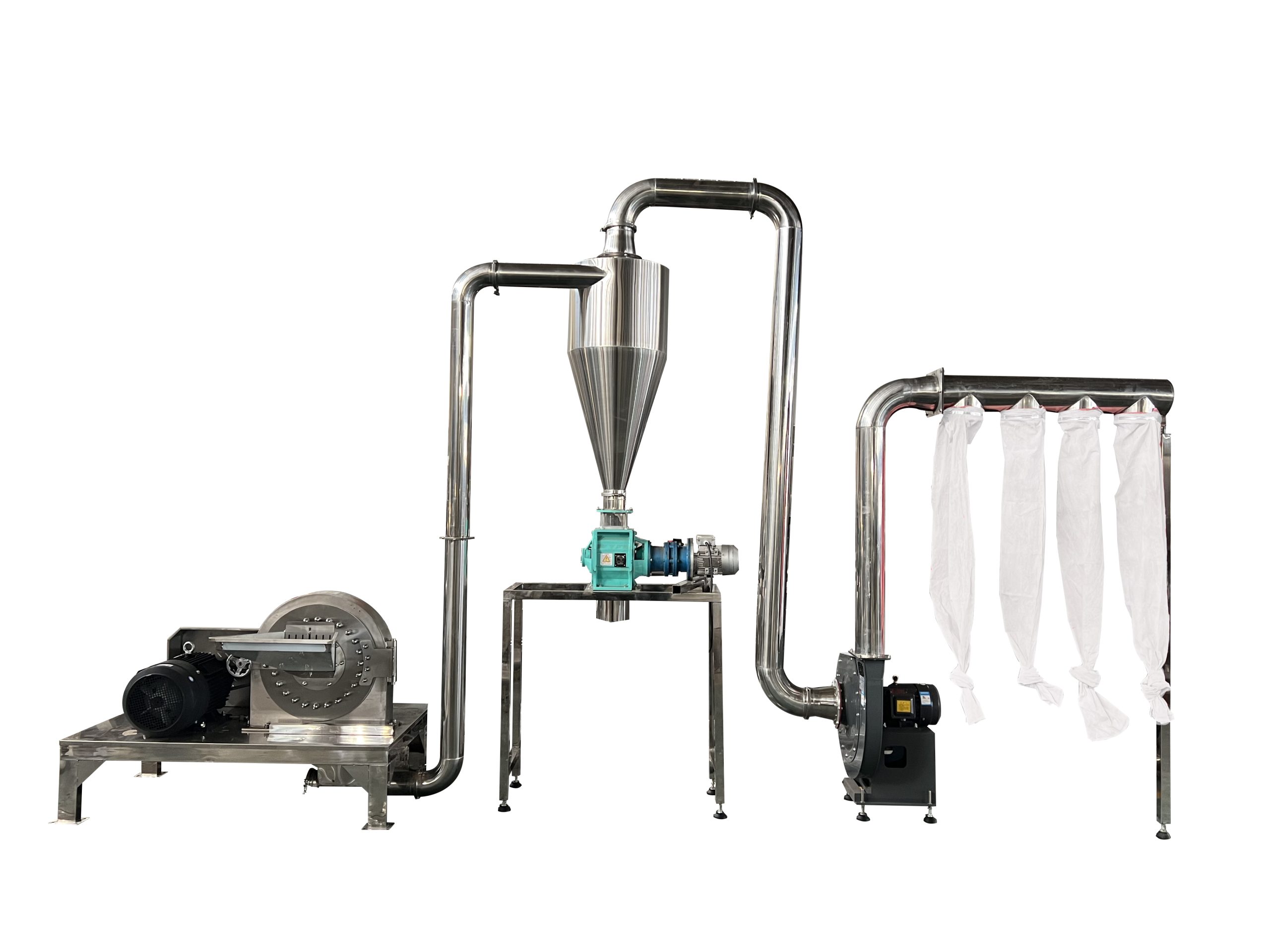
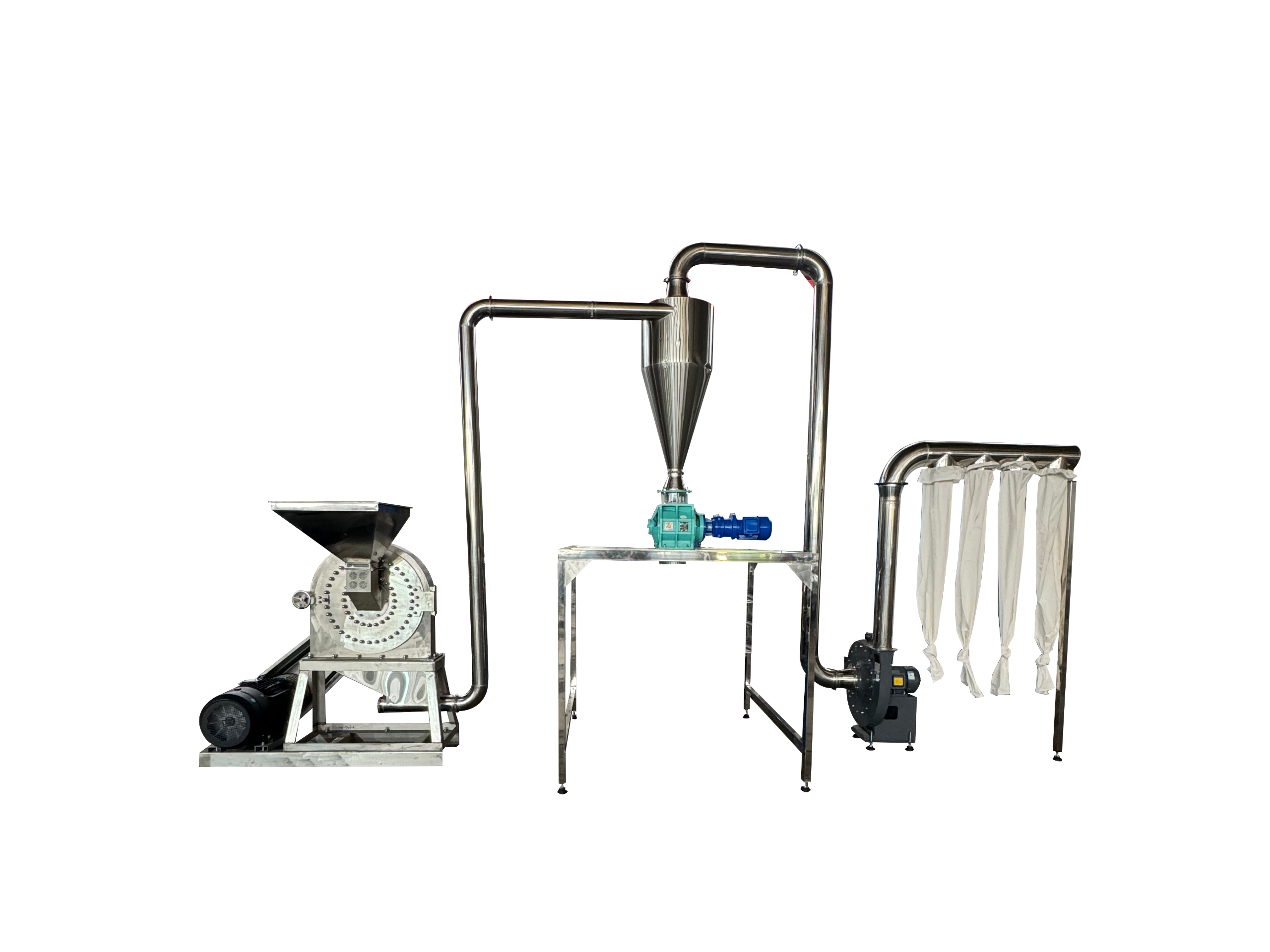
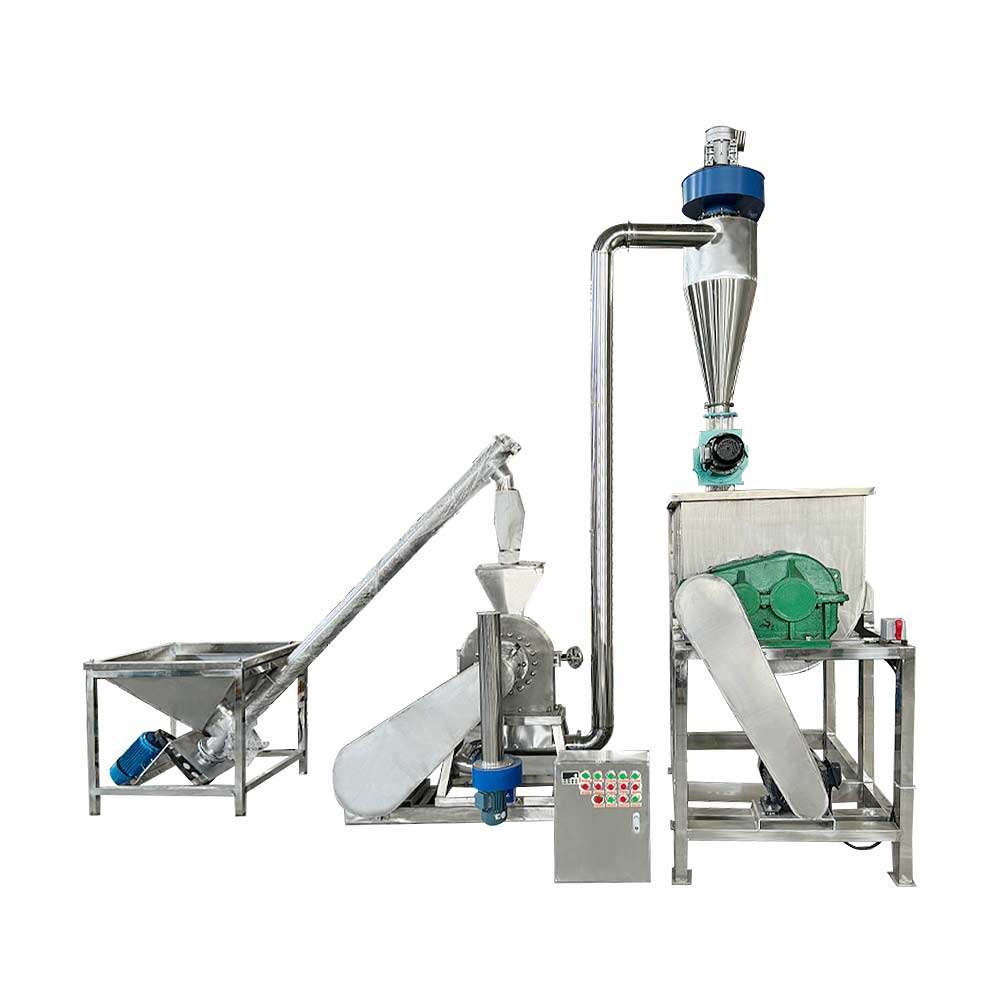
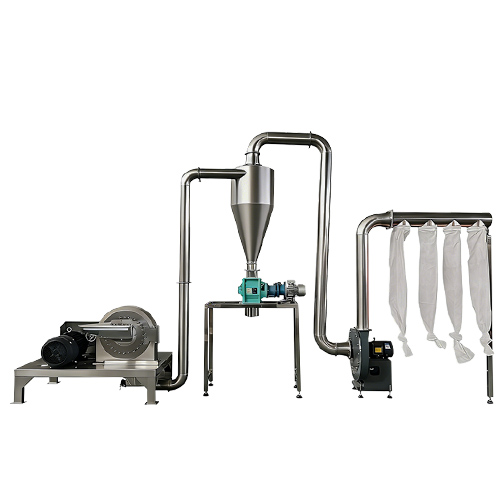
2. Integrated system: pin mill + cyclone + pulse dust collector

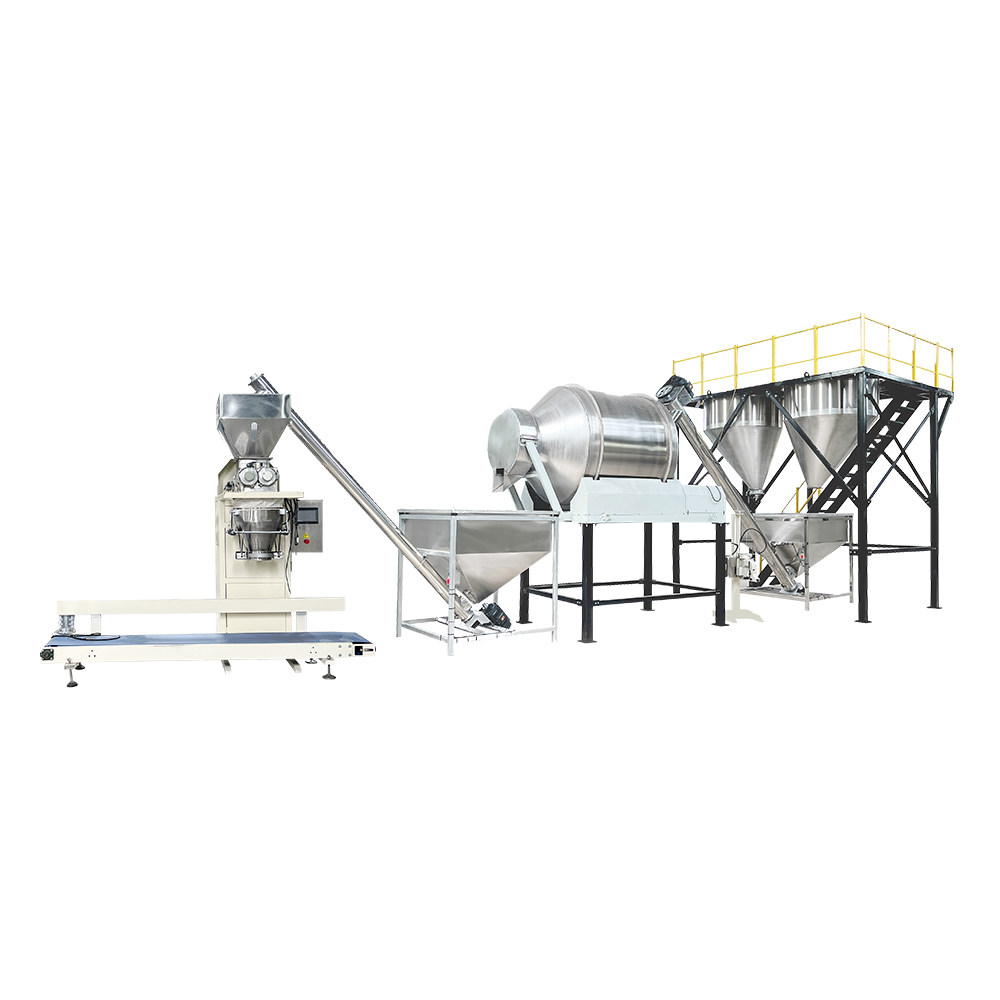
  • Often supplied as a single skid for easier installation and cleaner workshop operation.
  • Designed for continuous production: pulverizer → cyclone (coarse separation) → pulse jet baghouse (fine filtration).

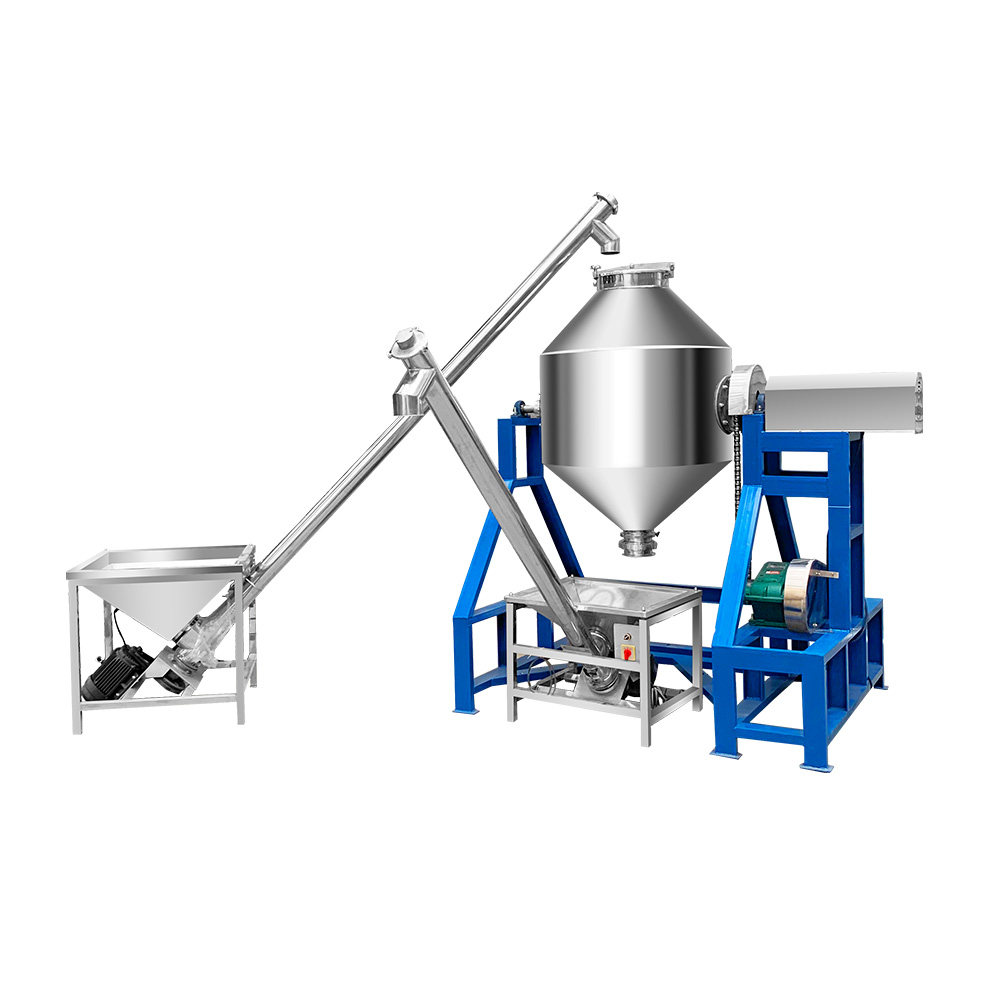
Optional add-ons: feed hoppers with controlled feeders, vibratory sieves after grinding, sample ports, and full stainless ducting for food/pharma applications.

How does a pin mill machine work?

  1. Feeding — material is fed into the pulverizing chamber via gravity or controlled feeder to ensure even throughput.
  2. Pulverization — high-speed rotors (blades/hammers/pins depending on design) impact and shear the material into smaller particles. Rotor speed and clearance control fineness.
  3. Primary separation — a cyclone or centrifugal separator removes coarse rejects and reduces the dust load on the filters.
  4. Filtration — the remaining fine dust-laden air passes through the pulse baghouse. Periodic compressed-air pulses dislodge cake build-up on filter bags; dust drops into the hopper below.
  5. Exhaust & recirculation — cleaned air is exhausted, and collected product is discharged for sieving or packaging. The closed loop reduces product loss and contamination.
<trp-post-container data-trp-post-id='3787'>Pin Mills</trp-post-container>(images 13)

What are typical technical specifications?

  • Capacity: 30–300 kg/h (scalable modules available)
  • Tamaño final de las partículas: 20–120 mesh (adjustable)
  • Material: Stainless steel 304 / optional 316L for contact parts
  • Drive: IE2/IE3 motor, frequency inverter optional for speed control
  • Dust collector type: Pulse-jet baghouse with PLC-controlled cleaning cycle
  • Power consumption: depends on capacity and rotor design (specify after feed test)
  • Options: GMP polishing, CIP-friendly design, ATEX classification for combustible dust zones (if required)

Technical Parameters

ModeloSize (mm)PotenciaTensiónWeight (kg)Crushing Fineness (mesh)Throughput (kg/h)
2004060 × 800 × 27502.2 kW220V47110 – 12030 – 50
3004160 × 800 × 27504 kW380V51510 – 12060 – 150
4004850 × 930 × 27507.5 kW380V56510 – 120200 – 400
5004900 × 1000 × 275011 kW380V65810 – 120300 – 500
6005000 × 990 × 275015 kW380V71010 – 120400 – 600
8005380 × 1150 × 293022 kW380V89810 – 120500 – 1000
10005500 × 1170 × 316030 kW380V120010 – 120800 – 1200

Where has this equipment been applied successfully?

  • Spice milling (Southeast Asia) — chili, turmeric, coriander: systems sized 150–250 kg/h with full stainless ducting for food safety.
  • Pharmaceutical herbal extracts (Central Asia) — 50–120 kg/h GMP-compliant lines for capsule and tablet feedstock.
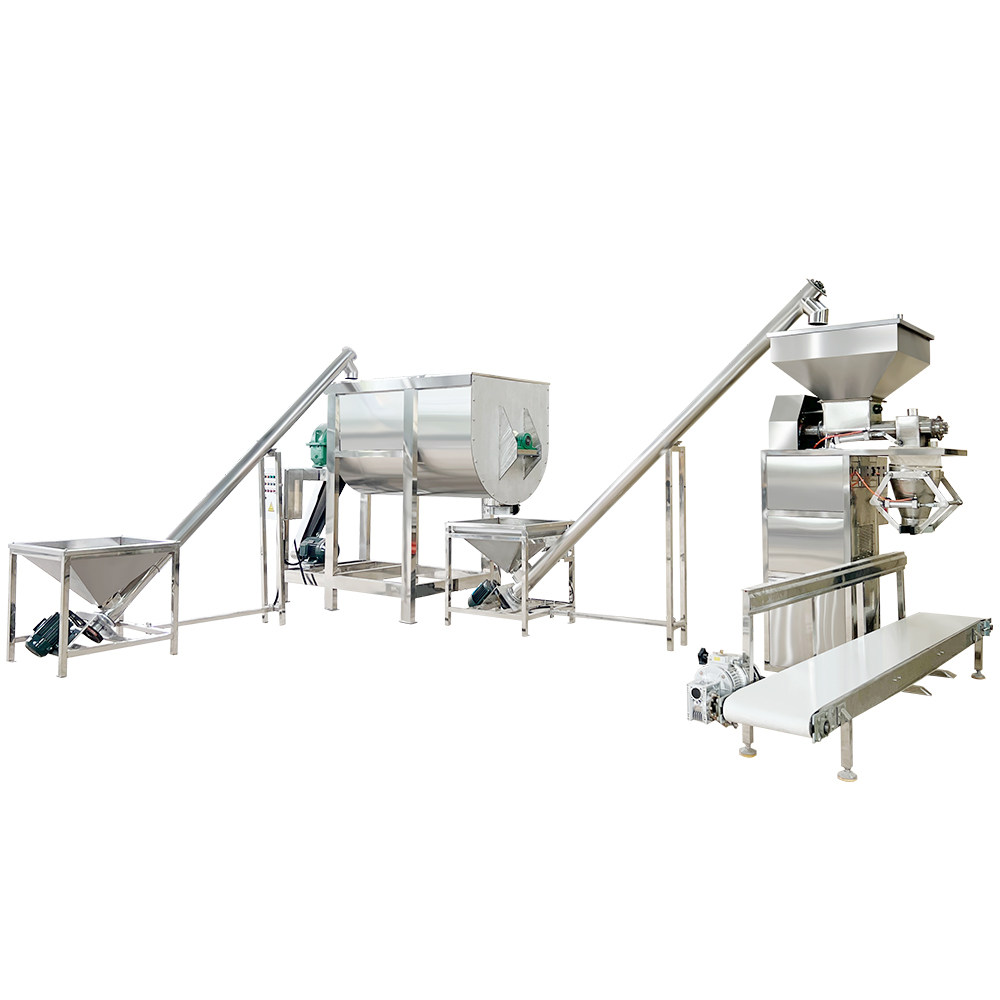
  • Food additives & grain powder (Africa) — 200–300 kg/h lines paired with sieving and packaging modules to reduce manual handling and dust exposure.

What should you consider before investing?

  • Raw material characteristics — moisture, oil content, hardness and abrasiveness all change mill selection and maintenance schedule.
  • Target particle size and distribution — tight particle specs may require multi-stage grinding + classification.
  • Throughput requirement — peak vs average throughput affects feeder and motor sizing.
  • Hygiene and certification needs — food/pharma will need polished finishes, sanitary fittings and traceability.
  • Dust hazard — combustible dust requires special measures (inerting, grounding, ATEX compliance).
  • Total cost of ownership — include spare parts, filter bags, energy and expected wear items in the calculation.

Which industries and applications suit this system?

  • Food & spices (ground spices, sugar, starch)
  • Pharmaceuticals (herbal powders, excipients)
  • Chemicals (pigments, catalysts, coatings)
  • Agriculture (feed additives, fertilizer fines)
  • Any application needing fine, clean powder with low cross-contamination risk
<trp-post-container data-trp-post-id='3787'>Pin Mills</trp-post-container>(images 14)

What benefits does the combined pulverizer + pulse dust collector provide?

  • Cleaner workshop environment — significant reduction of airborne dust.
  • Higher yield — less product lost to exhaust and better capture of fines.
  • Improved product quality — more uniform particle size and less contamination.
  • Lower operator exposure — safer working conditions and easier compliance.
  • Simplified maintenance — pulse cleaning reduces manual filter cleaning and downtime.
<trp-post-container data-trp-post-id='3787'>Pin Mills</trp-post-container>(images 15)
<trp-post-container data-trp-post-id='3787'>Pin Mills</trp-post-container>(images 16)

How can users extend the machine’s service life?

  • Operate within the specified feed size, moisture and load limits.
  • Establish a regular inspection regime for wear parts (rotors, liners, screens).
  • Replace filter media on a life-cycle schedule and check pulse valves periodically.
  • Keep bearings and drives correctly lubricated; follow manufacturer torque and preload specs.
  • Maintain a controlled feeding method — avoid tramp metal and large lumps.
  • Train operators on start/stop procedures, emergency stops and safe cleaning methods.

How to solve overheating in a pin mill? Which cooling solution is better?

To address grinding temperature rise, we offer both rear-mounted high-power fans and water-cooling systems, with a strong recommendation for the former. The key advantage lies in the dual function of our rear fan:

1) Efficient Cooling: The airflow directly removes frictional heat from the grinding chamber, providing significant and uniform temperature reduction.

2) Smooth Discharge: The airflow actively propels and conveys the ground material out of the chamber, effectively preventing fine powder from lingering or clogging.

This integrated “cooling + conveying” design is superior to passive water-cooling in preserving the material’s original color and aroma, while also offering a simpler and maintenance-free setup.

Este sitio web utiliza cookies para mejorar su experiencia de navegación. Si continúa navegando, consideramos que acepta su uso. Los datos recogidos en este sitio web se procesan y almacenan en Estados Unidos.

¡Lo tengo!