 粉体処理ソリューション - 粉砕機・グラインダー・ミキサー|Pcreate マシナリー
Banana Powder Making Machine
1851This machine is suitable for the grinding of bananas, plantains, ginger, turmeric, garlic, peppers and other foods.
詳細を見る駅全体を検索
Sugar Pulverizer Machine is commonly used core processing equipment in the food, pharmaceutical, fine chemical and other industries. Whether for small baking workshops, large‑scale food factories, or pharmaceutical enterprises, it is almost indispensable in the production process. It directly affects processing efficiency and finished product quality, making it important equipment to ensure smooth production.
However, many users new to sugar pulverizer machines encounter a series of practical issues: for example, they do not know how to select a suitable model, are unclear about what types of sugar the equipment can grind, do not understand key parameters such as power and energy consumption, and also have many doubts about equipment operation and maintenance. To help you solve these practical problems, Pcreate has specially compiled the most common and important questions about sugar pulverizer machines, covering model selection, application scope, parameter interpretation, operation methods, maintenance and more. We hope to help you quickly and comprehensively understand sugar pulverizer machines, select the right equipment based on your production needs, and master correct operation and maintenance methods to improve production efficiency, ensure product quality, and reduce equipment wear and operating costs.
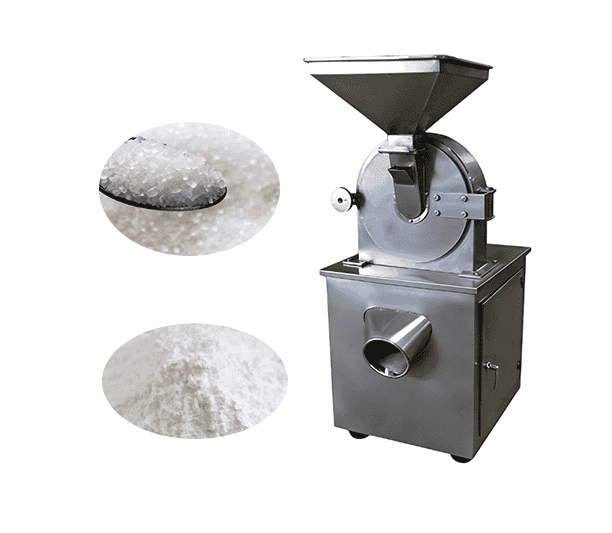
A sugar pulverizer machine is industrial equipment specially used to grind granular sugar into fine and uniform sugar powder. It is widely used in the food, pharmaceutical and other industries, and is key and indispensable production equipment for these sectors.
The body of the sugar pulverizer machine is mainly made of 304 or 316 food‑grade stainless steel. Both materials meet international hygiene standards and offer outstanding advantages:
In addition, the whole machine is manufactured in strict accordance with the food and drug hygiene and safety requirements, and will not release harmful substances, which can fundamentally ensure the safety of the sugar powder.
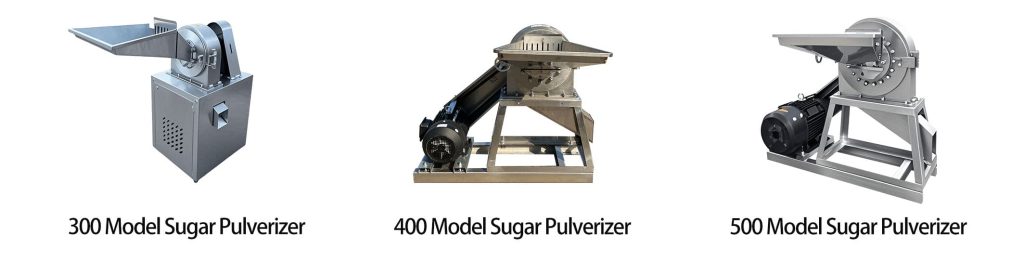
The sugar pulverizer machine is available in a wide range of models to meet the needs of enterprises of different scales:
The core function of a sugar pulverizer machine is to grind basic sugar raw materials such as white granulated sugar and soft white sugar into sugar powder with uniform fineness and stable quality. It has a wide range of applications across several core industries. Specific uses and industry applications are as follows:
The sugar pulverizer machine is essential equipment for food factories, bakeries and similar facilities. It is most widely used in the food industry and can produce sugar powder of different fineness levels to meet various food production requirements:

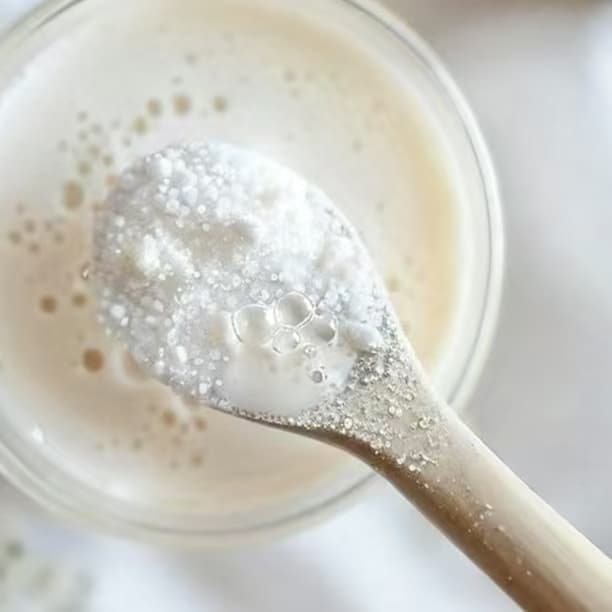
Sugar powder is a commonly used excipient in pharmaceuticals. In the pharmaceutical industry, fine sugar powder ground by a sugar pulverizer machine can be used in tablets, granules, syrups and other medicines, with the following functions:
In addition to the food and pharmaceutical industries, the sugar pulverizer machine can also be used in fine chemicals, condiment processing and other industries. Its core function is to provide fine sugar powder that meets required fineness standards as a production raw material. Specific applications include:
The sugar pulverizer machine offers strong applicability. With a specialized grinding structure, it can efficiently pulverize various sugars and sweetener raw materials with almost no material limitations. Processable types include the following:
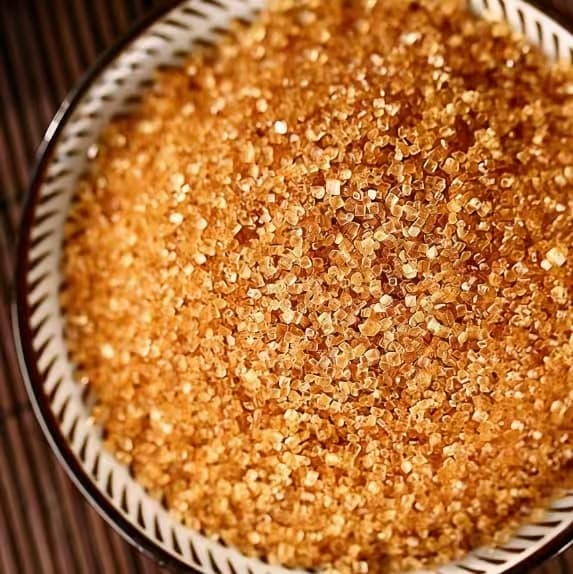
These are the most commonly processed materials for sugar pulverizer machines, including: white granulated sugar, brown granulated sugar, soft white sugar, and fine granulated sugar. In addition, it can re‑process pre‑ground sugar powder to further improve fineness.
Processing advantages: the equipment can grind these sugars into even powder without damaging original quality or changing the natural flavor of raw materials, fully meeting conventional processing requirements.

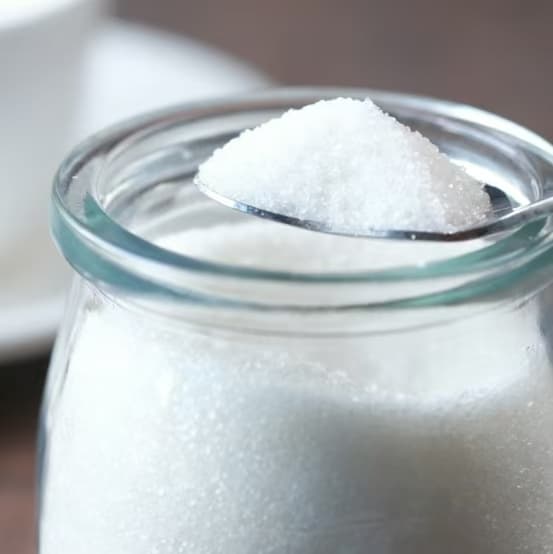
These sugars are widely used in food, pharmaceutical, beverage and other industries, including glucose, fructose, dextrose, maltose and more. A sugar pulverizer machine can grind these materials into fine powder suitable for subsequent formulation, forming and production processes.
Core benefit: the ground powder is fine and uniform, enabling more even mixing and faster dissolution without affecting downstream production efficiency.
With growing focus on healthy diets, sugar substitute raw materials are increasingly widely used, including stevia, xylitol, sorbitol and other sugar alcohol sweeteners.
Processing characteristics: the sugar pulverizer machine can achieve efficient grinding according to the material properties of such raw materials, ensuring functional ingredients are not damaged during grinding, making it ideal for healthy food and sugar‑free food production.
Generally speaking, any sugar or sweetener raw material with moderate hardness, low viscosity and no large foreign particles (large particles can be pre‑screened) can be pulverized by a sugar pulverizer machine without additional modification, offering high practicality.
The discharge fineness of Pcreate sugar pulverizer machines is flexibly adjustable. By replacing screens of different specifications, the machine can adapt to the needs of different industries and products. Operation is convenient without complicated steps.
Common industry fineness standards and corresponding application scenarios are as follows:
| Fineness Type | Mesh Range | Applicable Scenarios | Core Advantages |
|---|---|---|---|
| Regular Sugar Powder | 100–150 | Conventional food processing (baking, confectionery, solid beverages, etc.) | Balances taste and efficiency, widely used |
| Fine Sugar Powder | 200–325 | High‑end product processing (high‑end pastries, confectionery, dairy products, etc.) | Fine texture, improves added value |
| Standard Commercial Model | 20–280 | Diversified production for SMEs | Quick screen change, flexible, cost‑effective |
The key to choosing a sugar pulverizer machine is “matching to actual needs”. By clarifying your production requirements and matching them with the corresponding Pcreate model, you can accurately select reliable, cost‑effective equipment. The selection logic and matching plan are as follows:
Clarifying core needs before selection makes model matching more efficient. Focus on three points:
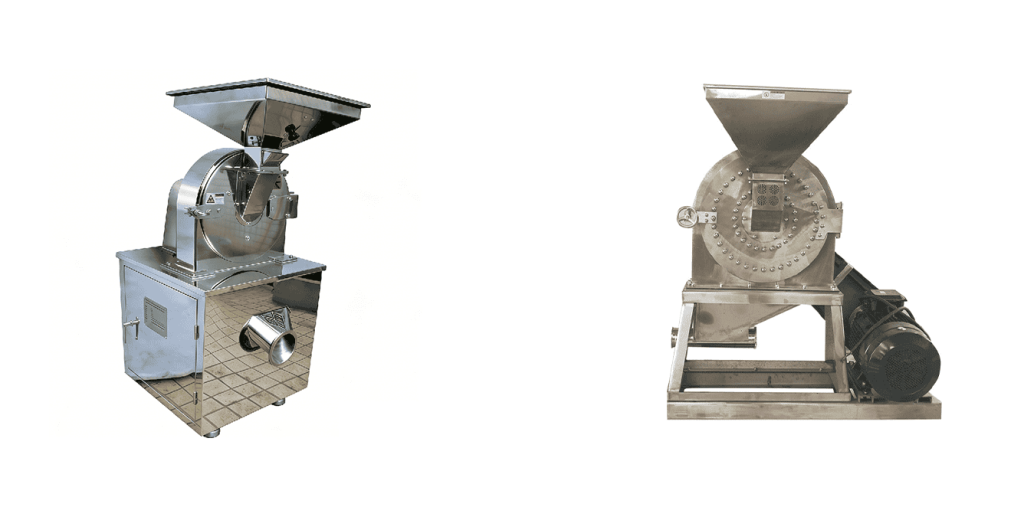
Based on the above requirements, the six Pcreate sugar pulverizer machine models and their applications are:
| モデル | Voltage Adaptation | Capacity (kg/h) | Applicable Scenarios |
|---|---|---|---|
| Model 300 (Small) | 220V | 60–150 | Small workshops, bakeries, small‑batch processing |
| Model 400 (Medium) | 380V | 200–400 | SMEs, daily batch production |
| Model 500 (Medium) | 380V | 300–500 | Medium‑sized processing plants, large‑scale regular production |
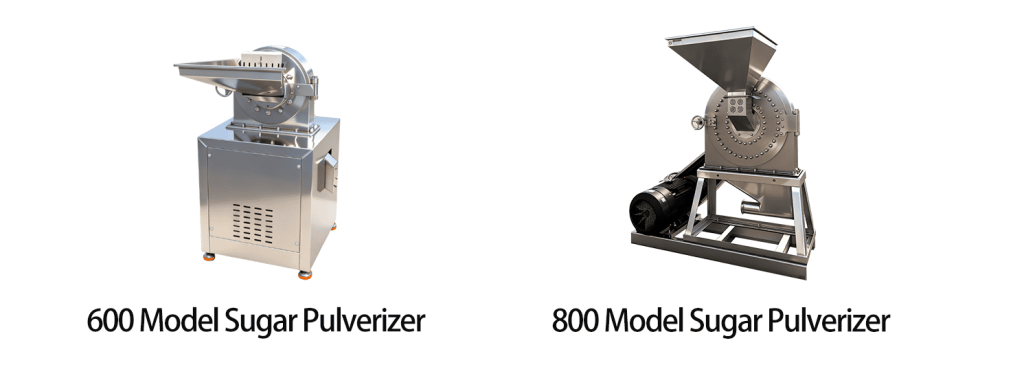
| Model 600 (Medium) | 380V | 400–600 | Medium‑scale scenarios with efficiency requirements |
| Model 800 (Large) | 380V | 500–1000 | Large processing plants, high‑output continuous production |
| Model 1000 (Large) | 380V | 800–1200 | Large food factories, assembly line mass production |
All Pcreate sugar pulverizer machine models share unified core advantages, with reliable quality and strong compatibility, greatly simplifying the selection process:
The motor power of a sugar pulverizer machine drives the equipment and directly determines grinding efficiency and maximum capacity. Energy consumption is closely related to power, operating time and capacity requirements. All Pcreate sugar pulverizer machine models feature optimized power matching, balancing efficiency and energy savings. Detailed parameters and explanations are as follows:
Each Pcreate sugar pulverizer machine model has a fixed motor power matched to its capacity. Energy consumption values are for reference under normal operation (actual consumption may vary slightly with fineness and material hardness):
| モデル | モーター・パワー | Suitable Production Mode | Core Applicable Scenarios |
|---|---|---|---|
| Model 300 (Small) | 4 kW | Small‑batch intermittent | Small workshops, bakeries |
| Model 400 (Medium) | 7.5 kW | Batch continuous | Daily production for SMEs |
| Model 500 (Medium) | 11 kW | Long‑time continuous | Large‑scale production for medium plants |
| Model 600 (Medium) | 15 kW | High‑efficiency continuous | Medium‑scale high‑efficiency scenarios |
| Model 800 (Large) | 22kW | Large‑scale continuous | High‑output production for large plants |
| Model 1000 (Large) | 30 kW | 24‑hour continuous | Assembly line mass production |
After clarifying your needs and selecting a suitable model, you should also focus on six core details when purchasing a sugar pulverizer machine. These details directly determine equipment safety, durability and long‑term operating costs. Understanding these points will help you select high‑quality, reliable and low‑maintenance equipment. Specific considerations are as follows:
This is the core standard for purchasing a sugar pulverizer machine, directly related to finished product safety. The main body of the equipment and all parts in contact with materials (grinding chamber, screen, feed inlet, etc.) must be made of 304 or 316 food‑grade stainless steel.
This material is corrosion‑resistant and easy to clean. The inner wall is smooth with no sanitary dead corners, will not trap materials or cause cross‑contamination, fully complies with food and pharmaceutical industry hygiene standards, fundamentally ensures sugar powder safety, and avoids compliance risks caused by substandard materials.
Production safety is critical. High‑quality sugar pulverizer machines must be equipped with complete safety protection devices: overload protection (prevents motor burnout), leakage protection (ensures operator electrical safety), emergency stop switch (quick shutdown in emergencies).
Additional note: sugar dust is flammable and explosive. For high‑output workshops or environments with high dust concentration, we recommend additional explosion‑proof motors, explosion‑proof electrical control systems and ATEX‑certified explosion‑proof devices to completely eliminate safety risks.
Prioritize sugar pulverizer machines with a quick‑disassembly structure. Such equipment allows fast disassembly of the grinding chamber, screen, pipelines and other parts without professional tools, making daily cleaning, disinfection and maintenance very convenient, saving significant time and labor costs.
Meanwhile, the quick‑disassembly structure reduces cross‑contamination from material residue, simplifies parts replacement and troubleshooting, lowers maintenance costs, extends service life, and makes long‑term operation more efficient and worry‑free.
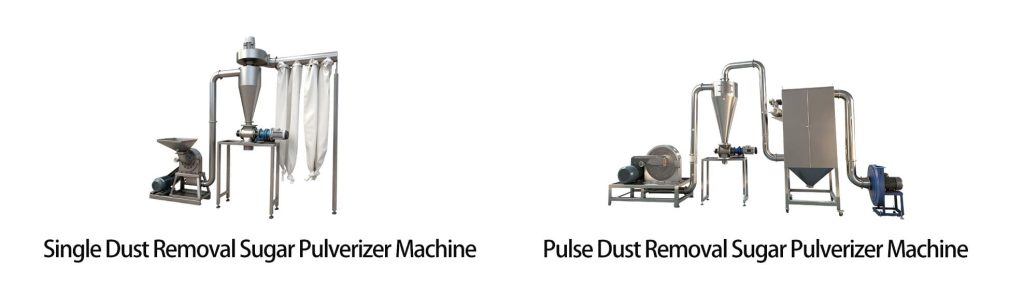
High‑quality sugar pulverizer machines must be equipped with a complete “cyclone separator + pulse dust removal system”. The cyclone separator effectively separates most sugar powder from air to reduce material waste; the pulse dust removal system further collects floating dust.
This keeps the workshop clean and environmentally friendly, avoids dust pollution, reduces dust explosion risks, and protects operator health, achieving multiple benefits and preventing future environmental or health issues.
When purchasing, always check the manufacturer’s after‑sales support to avoid unaddressed equipment failures affecting production. Prioritize manufacturers with a complete after‑sales system, focusing on three points: free installation and commissioning, warranty duration, and response speed for fault repair.
Pcreate sugar pulverizer machines come with comprehensive after‑sales service, including free installation and commissioning, reliable warranty, fast fault response, and professional on‑site maintenance, completely eliminating future usage concerns and ensuring stable equipment operation.
When purchasing a sugar pulverizer machine, verify grinding stability, focusing on two points: first, whether the powder is uniform and fine without coarse particles or agglomeration to avoid affecting product quality; second, whether the equipment runs smoothly with low noise and vibration, reducing failures and ensuring continuous production.
All Pcreate models undergo strict debugging with an upgraded and optimized grinding system, producing uniform powder and stable operation, with noise and vibration controlled within reasonable ranges. This ensures stable product quality, reduces failures and improves production efficiency.
| Key Considerations | Core Description |
|---|---|
| Material Hygiene (Bottom Line) | 304/316 food-grade stainless steel, compliant with hygiene standards |
| Safety Configuration (Key) | Overload/leakage protection + emergency stop; explosion-proof for high-dust workshops |
| Cleaning and Maintenance | Quick-disassembly structure, easy to maintain, cost-saving |
| Dust Removal System | Cyclone + pulse dust removal, safe and environmentally friendly |
| After-sales Service | Free installation, clear warranty, Pcreate’s comprehensive service |
| Grinding Stability | Uniform powder, smooth low-noise operation, stable quality |
Yes. As a professional manufacturer of sugar pulverizer machines, Pcreate provides exclusive customized services based on customers’ actual production needs. We create tailored sugar powder processing solutions to perfectly meet the personalized requirements of different enterprises without being limited to standard specifications.
Our customization service fully aligns with customer needs, based on “customization according to demand, precise adaptation”. We tailor and optimize all core components according to the specific parameters you provide, ensuring the customized equipment fully matches your production scenario. Customization scope includes:
To receive an accurate customized solution and quotation for a sugar pulverizer machine, you only need to provide three key details:
The core of operating a sugar pulverizer machine is “safe, standardized and procedure‑based”. Mastering correct operation methods ensures personnel safety, stable equipment performance, qualified sugar powder quality and improved production efficiency. Below is a general operation guide applicable to all models, including the working principle and detailed steps, easy to understand and implement.
A sugar pulverizer machine mainly consists of a fixed tooth disc and a movable tooth disc. The two discs rotate at high speed relative to each other, producing shearing, impact and grinding forces to directly pulverize granular sugar into the required fineness. The process does not damage raw material quality or change natural flavor, and grinding efficiency is extremely high — granular sugar can be ground into uniform fine powder in less than ten seconds after entering the grinding chamber.
The equipment features air‑assisted discharging. Qualified sugar powder is discharged and collected with the help of airflow, fan or gravity, realizing continuous and efficient grinding. Considering that sugar grinding easily generates dust and static electricity, and raw materials may absorb moisture and clump, Pcreate specially integrates explosion‑proof, anti‑static, dust‑proof and moisture‑proof functions, equipped with a complete cyclone separator and pulse dust removal system to ensure safe and stable operation that meets food and pharmaceutical industry hygiene and safety requirements.
Complete safety preparations before operation to avoid potential risks, focusing on four points:
Comprehensive inspection before startup is essential for normal operation, focusing on four items:
Start in sequence to avoid equipment damage:
Focus on uniform feeding and continuous monitoring:
Shut down in sequence to avoid material residue:
Proper cleaning and maintenance extend service life and ensure performance:
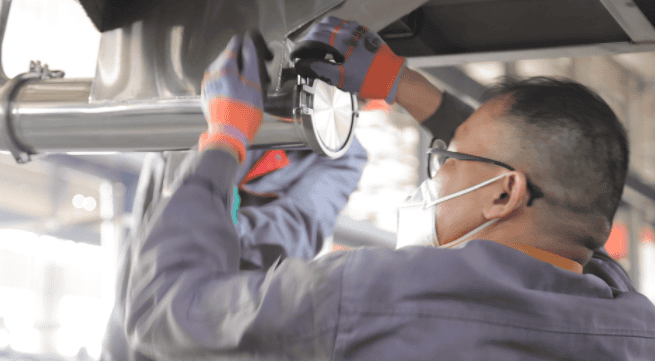
If an abnormality occurs during operation, respond immediately to avoid risks:
Follow these six rules to ensure safe, stable and qualified production:
| Item | Content |
|---|---|
| 動作原理 | High-speed relative rotation of fixed and movable discs shears and grinds sugar into fine powder. Equipped with air-assisted discharge, cyclone and pulse dust removal, explosion-proof and anti-static design. |
| Core Safety Premises | Good grounding and static elimination; magnetic separation for metal impurities; operator protection; clean, ventilated and dry working area. |
| 1. Pre-operation Inspection | Check safety devices, grinding chamber, screen and power; ensure raw materials are dry and clean. |
| 2. Startup Procedure | Turn on power → Start dust collector → Idle run 1–2 minutes → Start feeding. |
| 3. Feeding & Operation | Feed evenly; no hand contact with inlet; monitor current, temperature and noise; no adjustment during running. |
| 4. Shutdown Procedure | Stop feeding → Idle run 30–60 seconds → Turn off main machine → Stop dust collector → Cut off power. |
| 5. Cleaning & Maintenance | Clean grinding chamber and screen; check parts wear and lubrication; keep dry for long-term storage. |
| Emergency Handling | Press emergency stop for abnormal noise, spark, jam or overheating; use dry powder fire extinguisher if fire occurs. |
| Key Notes | Only trained personnel allowed; follow manual; regular maintenance; no unattended operation. |
Due to regional habits, industry terminology and functional emphasis, sugar pulverizer machines have many common aliases. Although the names differ, their core function is identical — all are industrial machines specially designed to grind granular sugars (white granulated sugar, rock sugar, glucose, etc.) into fine powder, with no functional difference.
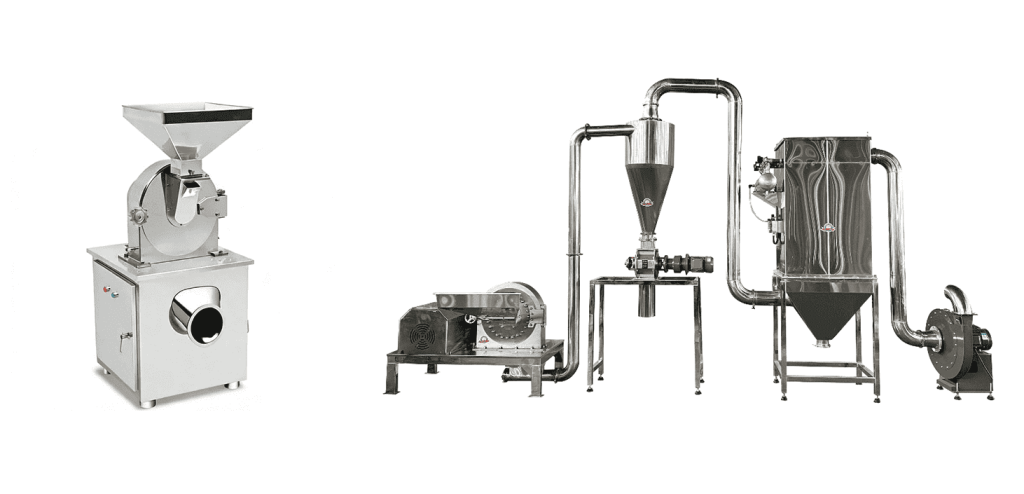
Various aliases reflect function, purpose or processing characteristics, with corresponding application scenarios:
| Alias | Core Characteristics | Applicable Scenarios |
|---|---|---|
| Sugar Grinding Machine | Direct, highlights grinding function | Daily industry communication, workshops |
| Edible Sugar Grinder | Food‑grade application, distinguishes from industrial grinders | Professional procurement, food & pharma |
| Icing Sugar Grinder | Focuses on icing sugar output | Baking, pastry production |
| Sugar Powder Processing Machine | Industrial, formal | Factory communication, contracts |
| Universal Sugar Grinder | Versatile for many sugar types | SMEs, multi‑material processing |
These aliases are fully interchangeable in daily use without strict restrictions:
In general, these aliases facilitate smooth communication across regions and industries, adapt to different scenarios, avoid misunderstandings, and make sugar pulverizer machine procurement and communication more efficient.
Yes. Our sugar pulverizer machine is designed for industrial continuous production, with a stable structure, reliable motor and good heat dissipation. It can run continuously for a long time (large models support 24‑hour uninterrupted operation), fully meeting large‑scale production needs.
Yes. We provide explosion‑proof sugar pulverizer machines equipped with explosion‑proof motors, explosion‑proof electrical control systems and anti‑static devices, compliant with ATEX and national explosion‑proof standards, suitable for high‑dust, high‑safety workshops.
We provide a 12‑month whole machine warranty (excluding wearing parts such as screens and blades). Free repair and parts replacement are provided for non‑human quality defects during the warranty period.
Yes. Customers are welcome to bring or send sugar materials to our factory for free testing. We can test grinding effect, fineness, output and provide test videos or data reports.
Yes. We provide free online installation, operation guidance and video support. On‑site commissioning and training by engineers can also be arranged according to specific service agreements.
Yes. Our medium and large sugar pulverizer machines can be integrated with automatic feeding, conveying, packaging and other equipment to form a complete automatic production line.
Yes. We support customized voltage and frequency for export markets, such as 220V / 380V, to meet power standards of different countries.
Yes. In addition to various sugars, it can also grind low‑moisture, low‑hardness, non‑sticky materials such as salt, monosodium glutamate, spices and rice flour.
Control raw material moisture < 5%; keep the workshop dry and ventilated; feed evenly; use suitable screens; avoid over‑grinding. For high‑requirement or large‑scale production, an air cooling conveyor or water cooling jacket can be added to remove heat from the grinding chamber, ensuring low‑temperature production and preserving sugar quality.
Pcreate sugar pulverizer machines are specially designed for sugar materials: low grinding temperature, no agglomeration or melting, high hygiene level, anti‑static, explosion‑proof, more uniform fineness, making them more suitable for the food and pharmaceutical industries.
The operating noise of Pcreate sugar pulverizer machines is lower than that of traditional grinders and meets workshop environmental requirements.
Yes. Fineness is adjusted by replacing screens of different specifications, which can be completed in 5–10 minutes, simple and fast.
In the R&D, production and service of sugar pulverizer machines, Pcreate Machinery always stands from the user’s perspective, practically addresses real production challenges, and focuses on solving difficulties encountered in sugar powder processing for the food, pharmaceutical, fine chemical and other industries.
Whether you are a small baking workshop, individual business, or enterprise of any scale; whether you need standard off‑the‑shelf models for immediate production, or require exclusive customized equipment for specific output and fineness demands, Pcreate can accurately match your requirements and provide fully suitable solutions.
All our sugar pulverizer machines are made of food‑grade stainless steel, with optimized internal structure and performance. They ensure durability, ease of operation, energy efficiency and stable operation. Every key parameter undergoes multiple strict adjustments to fully adapt to actual production scenarios, allowing safe and worry‑free use.
For a reliable sugar pulverizer machine, excellent core performance and strong adaptability are essential, and comprehensive after‑sales service is equally important. Every Pcreate sugar pulverizer machine strictly complies with food and pharmaceutical industry hygiene and safety standards, with strict quality control from production to delivery to ensure industry compliance.
Meanwhile, we provide full‑range after‑sales support: from early model selection guidance and detailed operation training to later fault maintenance and professional maintenance suggestions, with dedicated personnel following up throughout the process. We completely eliminate all worries in equipment procurement, use and maintenance, effectively avoid potential risks, and support smooth and efficient production.
In the future, Pcreate Machinery will continue to focus on the sugar pulverizer machine sector, follow industry development trends, listen to user needs, continuously optimize equipment performance and improve the service system, and build every machine with a pragmatic attitude. We will always uphold quality as our core principle, use more professional R&D technology, higher‑quality equipment and more attentive full‑process service to effectively support our customers.
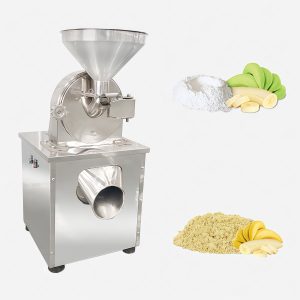
This machine is suitable for the grinding of bananas, plantains, ginger, turmeric, garlic, peppers and other foods.
詳細を見る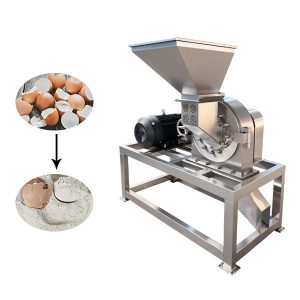
The eggshell grinding machine is an industrial equipment specifically designed for the fine grinding and processing of eggshell materials. It can efficiently grind eggshells, duck eggshells, and other eggshell raw materials into eggshell powder wi...
詳細を見る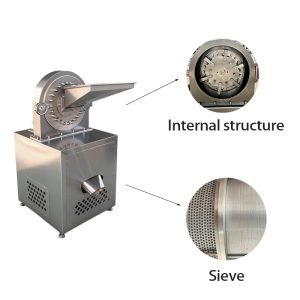
The Shrimp skin Ultrafine Pulverizer is essentially a stainless steel toothed disc pulverizer. Its crushing fineness can be flexibly adjusted (10 to 120 meshes), which can accurately adapt to the production needs of food, feed, biological processi...
詳細を見る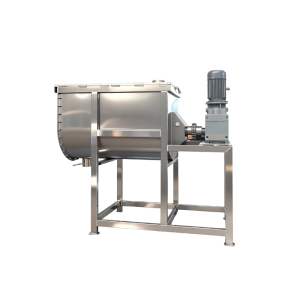
This ribbon flour mixer has a pro ribbon mixing setup – mixes flour 360 degrees all around perfectly!
詳細を見るこのウェブサイトでは、お客様の閲覧体験を向上させるためにクッキーを使用しています。本サイトの利用を継続することにより、クッキーの使用に同意したものとみなされます。このウェブサイトから収集されたデータは、米国で処理・保存されます。
 English English
  Japanese
 Korean
 Russian
 Spanish
 French
 Portuguese
 Indonesian
 Myanmar
 Thai
Thai
 Vietnamese
 Arabic