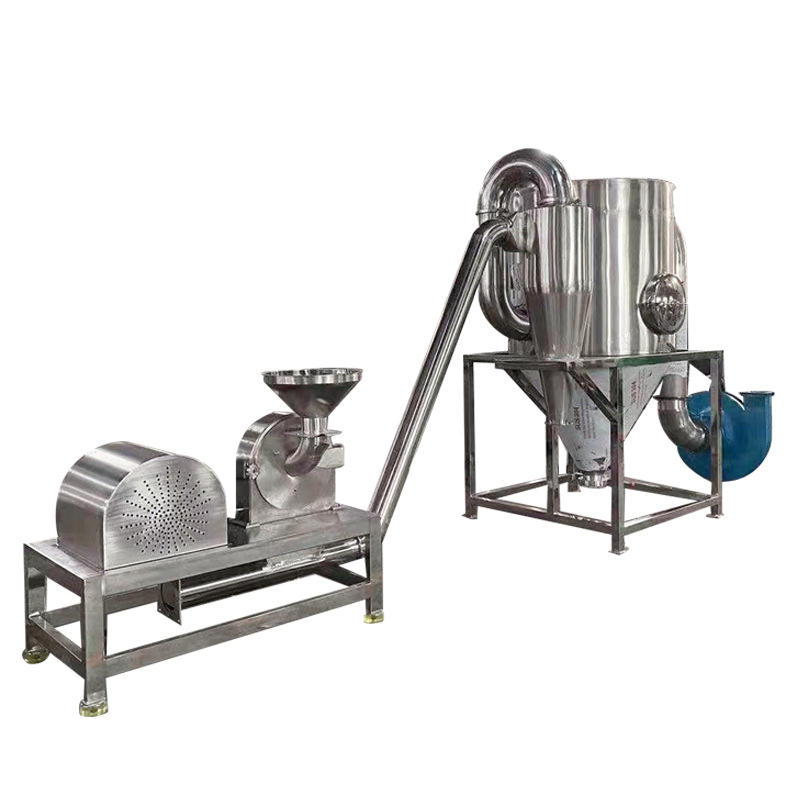
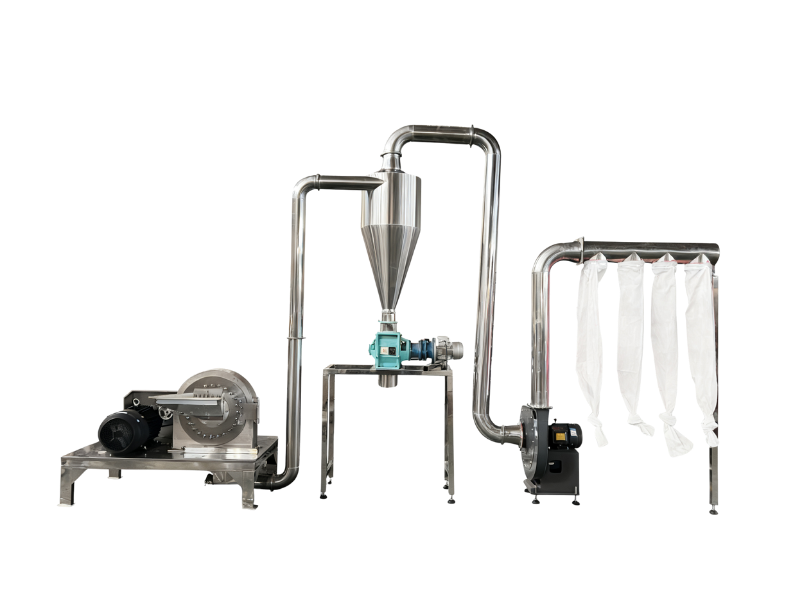
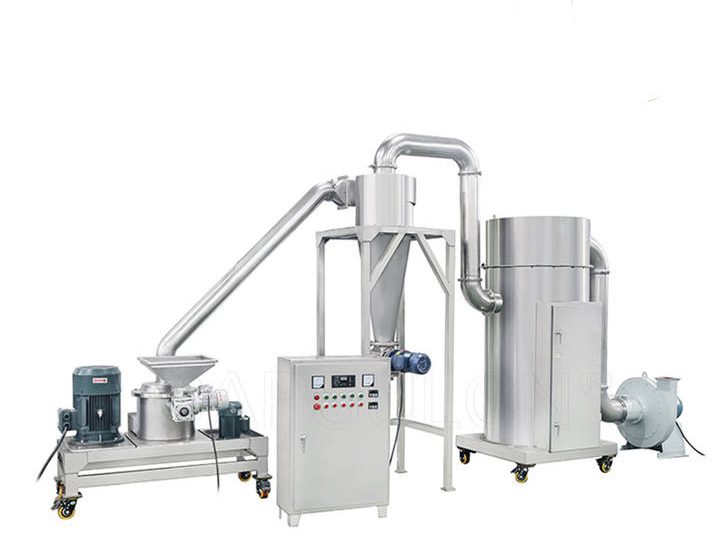
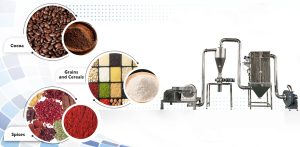
In today’s competitive powder processing industry, achieving high fineness, uniform particle size, and stable production performance is essential for producing high-value products. An ultra-fine grinding mill is a specialized machine designed to meet these demands by transforming a wide range of dry materials into extremely fine, consistent powders. Unlike conventional grinding equipment, which typically produces coarse or medium-sized particles, ultra-fine grinding mills are capable of reaching 100–3000 mesh or even micron-level fineness. This makes them an ideal solution for industries that require precise particle size control, such as food processing, pharmaceuticals, chemicals, cosmetics, and advanced materials. The machine operates using a combination of high-speed impact, shear, and grinding forces, along with an integrated classification system. This allows only particles that meet the required size to pass through, while larger particles are continuously reprocessed. As a result, the final product features excellent uniformity, improved flowability, and enhanced functional properties. With the increasing demand for fine powder applications—ranging from nutritional supplements to industrial fillers—ultra-fine grinding mills have become a key piece of equipment in modern production lines. They not only improve product quality but also enhance processing efficiency and reduce material waste. For manufacturers looking to upgrade their powder processing capabilities, investing in an ultra-fine grinding mill is a strategic step toward higher productivity, better product consistency, and stronger market competitiveness.
In the modern powder processing industry, the ultrafine pulverizer is specialized equipment designed specifically for grinding various dry materials into high-fineness, uniform powders. Compared to ordinary crushers, it not only achieves a finer degree of pulverization but also ensures the uniformity and stability of the powder particles, thereby meeting the high-quality powder production demands of industries such as food, pharmaceuticals, chemicals, and new materials.
Generally, the fineness of powder produced by ordinary crushers falls mostly within the range of 20 to 100 mesh, whereas an ultrafine pulverizer can grind materials to a fineness of 100 to 3000 mesh—or even finer. This high-precision grinding capability makes it an indispensable piece of equipment in many fine processing industries.
မော်ဒယ်
Capacity(kg/h)
Feeding material size(mm)
Final material size(mm)
Total power(kw)
Main axis rotate speed(r/min)
Machine size(mm)
Weight(kg)
WFJ-15
20-80
<10
80-500
13.37
0-5800
4500*1250*2700
1000
WFJ-20
50-100
<10
80-500
18.37
0-4200
6000*1250*2900
1200
WFJ-30
100-200
<10
80-500
42.5
0-3800
7100*1300*3650
1800
WFJ-60
200-500
<10
80-500
76.75
0-3200
8000*2300*4500
2500
WFJ-80
300-800
<10
80-500
96
0-2800
8500*2500*4600
3000
WFJ-100
400-1200
<10
80-500
138
0-2000
10000*2800*5000
4000
Working Principle of the Ultrafine Pulverizer
The ultrafine pulverizer primarily achieves the production of ultrafine powders by subjecting materials to a staged pulverization process involving a combination of forces, including high-speed impact, shearing, friction, and grinding.
The entire operational process typically comprises the following steps:
1. Material Feeding
Raw materials—which have undergone pretreatment or drying—are introduced into the pulverizing chamber via a feeding mechanism. To ensure optimal pulverization results, the materials typically require a low moisture content.
2. High-Speed Grinding and Pulverization
Upon entering the pulverizing chamber, the materials are subjected to intense impact and shearing forces generated by high-speed rotating grinding discs, hammers, or blades. Simultaneously, the material particles collide and rub against one another, causing them to gradually reduce in size.
3. Classification and Screening
The equipment is typically fitted with an internal classification device; only powder particles that have reached the specified fineness are permitted to pass through the classification system and be discharged, while larger particles remain within the pulverizing chamber to undergo further grinding.
4. Powder Collection
Once the powder reaches the standard fineness, it is conveyed via pipelines to a powder collection system or dust removal unit for recovery, thereby completing the entire pulverization process.
Through this continuous cycle of pulverization and classification, the ultrafine pulverizer is able to consistently produce ultrafine powders with uniform particle sizes.
Key Features of the Ultrafine Pulverizer
High-Fineness Grinding Capability
The ultrafine pulverizer is capable of producing extremely fine powders, thereby meeting the processing requirements for a wide range of high-end powder products. Uniform Particle Size
The internal classification system of the equipment enables precise control over powder particle size, resulting in a final product with greater particle size uniformity.
High Production Efficiency
Compared to traditional grinding equipment, the ultrafine pulverizer offers superior crushing efficiency, capable of processing large volumes of material within a relatively short timeframe.
Stable Operation
Featuring a robust and well-engineered structural design, the equipment is capable of sustained, continuous operation over extended periods, making it ideally suited for industrial-scale production environments.
Broad Range of Applications
Whether in the food, pharmaceutical, or chemical industries, the ultrafine pulverizer plays a vital role across a wide spectrum of applications.
The Difference Between Ultrafine Pulverizers and Standard Crushers
Comparison Items
Standard Crusher
Ultra Fine Grinding Mill
Grinding Fineness
20–100 mesh
100–3000 mesh
Powder Uniformity
generally
Very uniform
Crushing Method
Single-Pass Crushing
Crushing + Classification
Application Areas
General Machining
Fine Powder Processing
Standard Crusher
Ultra Fine Grinding Mill
Simply put, standard pulverizers are better suited for processing coarse or medium-fineness powders, whereas ultrafine grinding mills are designed for high-precision powder production.
Why are an increasing number of enterprises choosing ultrafine grinding mills?
Driven by advancements in the food processing, nutritional supplements, cosmetic ingredients, and new materials sectors, market demands regarding the fineness and quality of powder products are becoming increasingly stringent. Traditional pulverizing equipment is often unable to meet these evolving requirements; consequently, ultrafine grinding mills—distinguished by their capacity for high fineness, high efficiency, and stable operation—have gradually emerged as essential equipment for powder processing enterprises.
For companies seeking to produce high-quality powder products, a high-performance, stable ultrafine grinding mill not only boosts production efficiency but also enhances product quality, thereby securing a significant competitive advantage in the marketplace.
Applications of ultra fine grinding mill
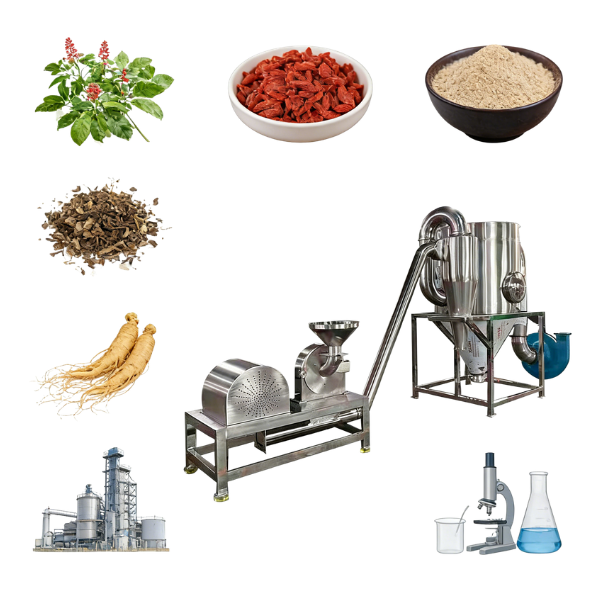
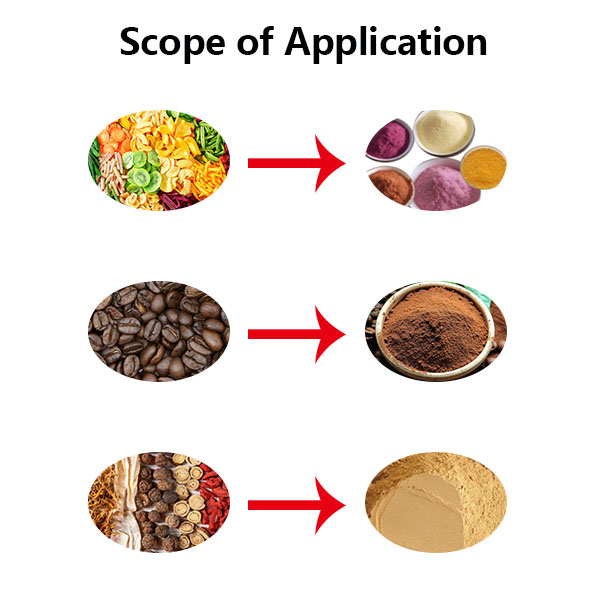
With the advancement of powder processing technology, ultrafine grinding mills have become essential equipment for many industries seeking to produce high-quality powder products. Capable of grinding materials into powders characterized by exceptional fineness, uniformity, and stability, these mills have found widespread application across diverse fields, including food processing, pharmaceuticals, chemicals, and new materials. For enterprises requiring fine powder raw materials, ultrafine grinding mills not only boost production efficiency but also significantly enhance the added value of their products.
Food Processing Industry
In the food industry, many products require processing into fine powders to facilitate subsequent manufacturing stages or for direct use as food ingredients. Ultrafine grinding mills can process a wide variety of natural raw materials into delicate, uniform powders, thereby improving both the texture and quality of the final products.
Common applications include:
Eggshell powder (used in calcium supplements and food additives)
Cereal and grain powders (e.g., rice, corn, wheat, oats, etc.)
Tea powders (e.g., matcha, green tea powder, etc.)
Through ultrafine grinding, raw material particles become finer and more readily absorbed by the human body; furthermore, this process facilitates easier mixing and blending during food manufacturing.
Pharmaceutical and Health Supplement Industries
In the pharmaceutical and health supplement sectors, the fineness and purity of raw material powders exert a critical influence on product quality. Ultrafine grinding mills enable the processing of various natural botanicals and medicinal herbs into highly refined powders, thereby enhancing the bioavailability and utilization rate of active ingredients.
Common applications include:
Processing of traditional Chinese herbal powders
Raw materials for botanical extracts
Nutritional and health supplement powders
Raw materials for pharmaceutical intermediates
Finer powder particles possess a smaller size and a larger specific surface area, which helps to improve the solubility and absorption rates of medicinal compounds or nutritional ingredients.
ဓာတုဗေဒလုပ်ငန်း
In chemical manufacturing, numerous raw materials must be processed into fine powders to facilitate their participation in chemical reactions or for use as functional fillers. Ultrafine grinding mills enable the consistent production of uniform powder materials, thereby ensuring the quality and integrity of chemical products. Common applications include:
Calcium carbonate powder
Talc powder
Mineral powders
Pigment powders
Chemical additive raw materials
These powders typically require a high degree of fineness and uniformity; consequently, ultrafine grinding equipment plays a vital role in the chemical industry.
Cosmetics Industry
In cosmetic manufacturing, many raw materials must be processed into extremely fine powders to ensure a delicate product texture and an optimal user experience. Ultrafine grinding mills can be utilized to process a wide variety of natural or mineral-based raw materials.
Examples include:
Botanical powder ingredients
Pearl powder
Mineral powders
These powders are widely incorporated into facial masks, skincare products, and various beauty formulations.
Feed and Agriculture Industries
In the fields of agriculture and feed processing, ultrafine powders enhance the utilization efficiency of raw materials. Through ultrafine grinding, raw materials become more readily absorbable by animals, thereby boosting their nutritional value.
Common applications include:
Feed additive powders
Mineral nutrient powders
Plant protein powders
Fine powders are not only easier to blend but also contribute to an overall improvement in feed quality.
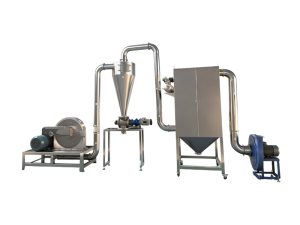
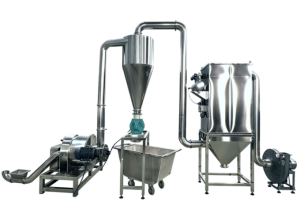
Composition of an ultra fine grinding mill production line
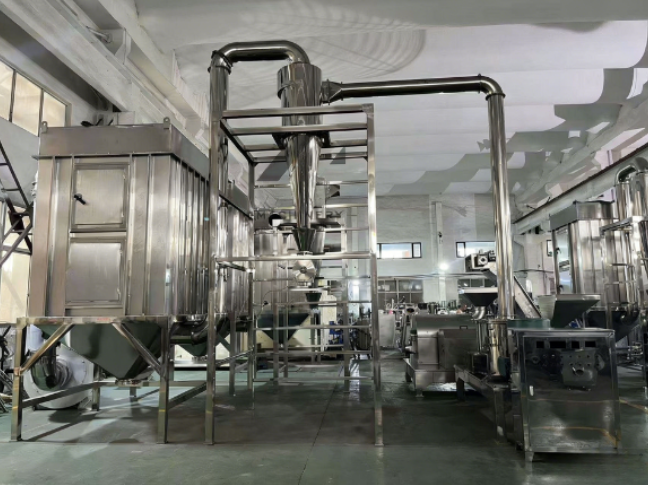
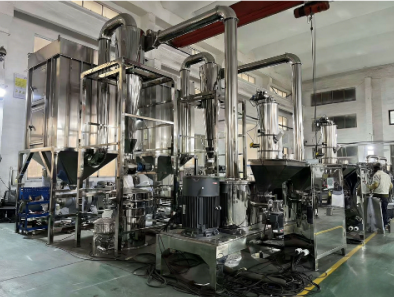
In the powder processing industry, a complete production line for ultrafine grinding machines is not merely a single piece of equipment, but rather a comprehensive system comprising a combination of various devices. Through the coordinated operation of automated processes—including conveying, grinding, classifying, and collecting—such a production line enables continuous, efficient, and stable powder production. A properly configured production line not only boosts output but also ensures uniform powder fineness while minimizing manual intervention.
Typically, a standard ultrafine grinding production line consists primarily of the following components:
Raw Material Pre-treatment Equipment
Before entering the grinding system, many raw materials require simple pre-treatment to ensure optimal grinding performance and stable equipment operation.
Common equipment includes:
Raw Material Crushers: To break down larger materials into smaller particles.
Drying Equipment: To reduce the moisture content of the materials.
Screening Equipment: To remove impurities or oversized particles.
This stage ensures that the material entering the ultrafine grinding machine possesses a uniform particle size distribution, thereby enhancing pulverization efficiency.
Automatic Feeding System
The automatic feeding system is responsible for reliably conveying the pre-treated raw materials into the grinding equipment. Common feeding methods include:
Screw Conveyors
Vacuum Feeders
Belt Conveyors
Automated feeding not only reduces the need for manual labor but also maintains a consistent feed rate, resulting in smoother and more stable equipment operation.
Ultrafine Grinding Machine (Core Equipment)
The ultrafine grinding machine serves as the core component of the entire production line, primarily tasked with pulverizing materials into high-fineness powder. Utilizing high-speed rotating grinding mechanisms and internal crushing structures, the material undergoes impact, shearing, and friction within the machine, thereby being gradually reduced to fine powder.
Depending on specific production requirements, common equipment types include:
Ultrafine Pulverizers
Air-Jet Mills
Ultrafine Grinding Mills
This specific piece of equipment directly determines the final powder fineness, production output, and overall product quality.
Classification System
During the ultrafine grinding process, the resulting powder particles are not entirely uniform in size; therefore, a classification system is required to sort and separate them. The primary functions of the classification system are:
To discharge powder that meets the required fineness specifications;
To return particles that do not meet the fineness criteria back for further grinding.
Through this cyclical classification process, the particle size distribution of the final product is ensured to be more uniform.
Powder Collection System
Upon completion of the grinding process, the resulting powder is gathered and processed centrally using collection devices. Common collection equipment includes:
Cyclone separators
Pulse dust collectors
Powder collection bins
This system not only collects the finished powder but also minimizes dust pollution, thereby enhancing the cleanliness of the production environment.
Finished Product Packaging Equipment
Once the powder collection is complete, the finished product typically undergoes automated packaging to facilitate storage and transportation. Common equipment includes:
Automatic weighing and packaging machines
Semi-automatic packaging machines
Sealing and packaging devices
Automated packaging systems boost production efficiency and ensure consistency in product weight.
Frequently Asked Questions
Is the particle size uniform?
Yes. Ultra fine grinding mills are equipped with a classification system, which ensures that only particles meeting the required size are collected. Oversized particles are returned for further grinding, resulting in uniform and consistent powder quality.
What is the production capacity?
Capacity varies depending on the model and material, typically ranging from:
Small machines: 10–50 kg/h
Medium machines: 50–200 kg/h
Large industrial systems: 200–1000+ kg/h
Finer powder usually means lower output, so there is always a balance between fineness and capacity.
Does the machine generate heat during grinding?
Yes, some heat is generated due to high-speed operation. However, most modern machines are designed with:
Air cooling systems
Continuous airflow design
to minimize temperature rise and protect heat-sensitive materials.
Can the machine run continuously?
Yes. High-quality ultra fine grinding mills are designed for ဆက်တိုက်လုပ်ဆောင်ခြင်း။, making them suitable for industrial production lines. Stability depends on proper maintenance and correct usage.
Is it easy to clean the machine?
Most machines are made of food-grade stainless steel (such as SUS 304/316) and feature a modular design, making them relatively easy to disassemble and clean—especially important for food and pharmaceutical applications.
What is the power consumption?
Power consumption depends on machine size and capacity. Generally, ultra fine grinding mills are designed to be energy-efficient, but higher fineness usually requires more energy.
Are wearing parts expensive?
Wear parts such as grinding discs, hammers, or liners will need periodic replacement. The cost depends on:
Material hardness
Usage frequency
Machine quality
High-quality machines typically have longer service life and lower maintenance costs.
Can the machine be customized?
Yes. Most manufacturers offer customization based on:
Required fineness
Production capacity
Material characteristics
Complete production line integration
Optional systems include automatic feeding, dust collection, and packaging solutions.
Is it suitable for heat-sensitive materials?
Yes, but it depends on the machine design. Some models (such as airflow or cryogenic systems) are better suited for heat-sensitive materials to prevent degradation.
What should I consider before buying?
Key factors to consider include:
Required fineness (mesh or micron)
Production capacity
Material type
Energy consumption
Ease of maintenance
After-sales support
Summary and Conclusion
An ultra fine grinding mill is a high-efficiency industrial machine designed to produce very fine, uniform powder from a wide range of dry materials. Compared to conventional grinding equipment, it delivers significantly finer particle sizes—typically ranging from 100 to 3000 mesh or even finer—while maintaining consistent quality and stable performance.
By combining high-speed impact, shear, and classification technology, the machine ensures that only particles meeting the required fineness are collected, while oversized particles are continuously reprocessed. This results in uniform particle distribution, improved product quality, and higher processing efficiency.
Ultra fine grinding mills are widely used across multiple industries, including:
For manufacturers aiming to produce high-value, fine powder products, an ultra fine grinding mill is not just a processing tool—it is a critical investment that directly impacts product quality, production efficiency, and market competitiveness. Choosing the right system and configuration can significantly enhance both performance and long-term profitability.
PinChuang Machinery primarily provides complete sets of equipment for the powder industry, covering everything from individual units to systems, from crushing, conveying, mixing, screening to granulation, serving industries such as food additives, baking ingredients, pharmaceutical intermediates, health foods, and chemical raw materials. With leading technology and processes, as well as a comprehensive pre-sales system, we have won consistent praise from domestic and international customers. Our company values building long-term partnerships with our clients, and through first-class product quality and dedicated service, we have witnessed the growth of numerous customers. We firmly believe that quality and efficiency are reflected in engineering design, R&D experiments, equipment production and installation, and every detail. At every stage, we will strive to ensure our machines operate at their optimal state.
This chili grinder is a precision grinding equipment elaborately made of high - strength food - grade 304 stainless steel. Its core design breaks through the limitations of traditional grinders, integrating grinding, crushing and powder - making f...
The stainless steel powdered sugar mill is not only a simple grinding tool but also a precision processing system deeply optimized for the characteristics of sugar materials. It integrates high-efficiency production capacity, precise quality cont...
 Powder Processing Solutions – Pulverizers, Grinders & Mixers | စက်ယန္တရားများဖန်တီးပါ။