Pesquisar toda a estação

Acessórios: Bateria de veículo para scooter bioeléctrica

Pin Mills

A pin mill is a type of high-speed grinding machine used to reduce materials into fine or ultra-fine powder.
  • modelo200-1000
  • Power2.2kw-30kw
  • Weight85kg-550kg
  • Yield50kg-1200kg(according to the machine model)
  • Dimensões1200mm×850mm×1260mm(Customizable)

What is a pin mill?

pin mill is a type of industrial grinding machine that uses high-speed rotating discs fitted with rows of intermeshing pins to reduce materials into fine powders through repeated impact and shearing

It works by using two discs fitted with multiple pins—one rotating at high speed and the other stationary or counter-rotating. When material enters the grinding chamber, it is broken down by impact and shear forces generated between the pins.

Pin mills are widely used because they offer:Uniform particle size;High grinding efficiency;Low heat generation;Continuous operation

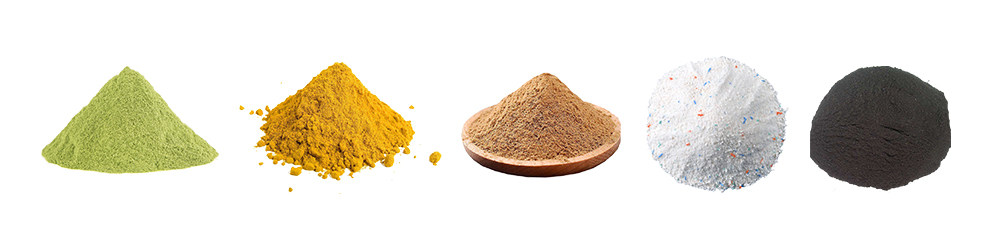
They are commonly applied in the food, pharmaceutical, chemical, and mineral industries, especially for materials such as spices, sugar, salt, chemicals, and powders that require precise fineness control.
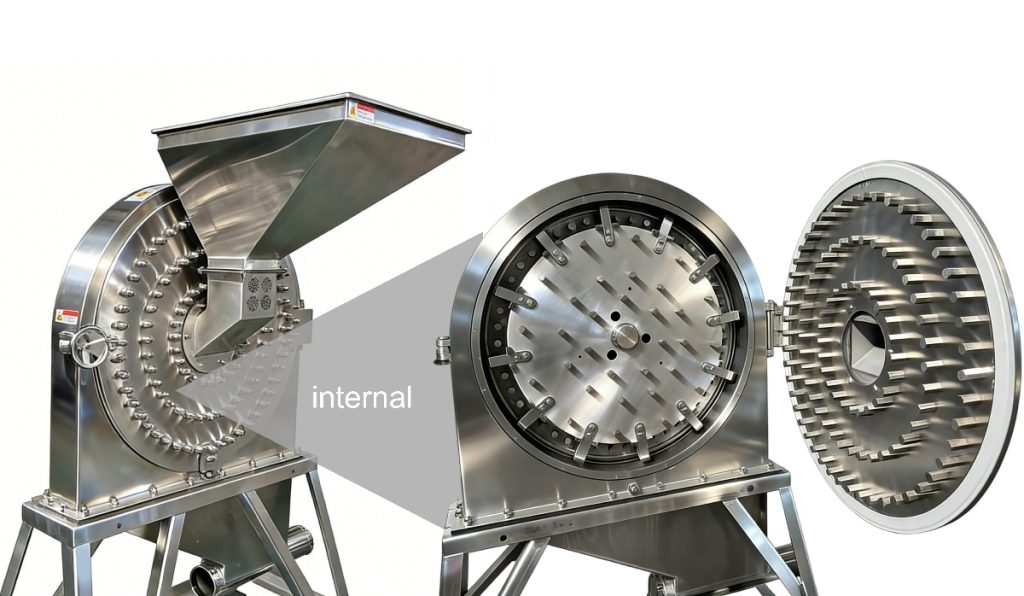
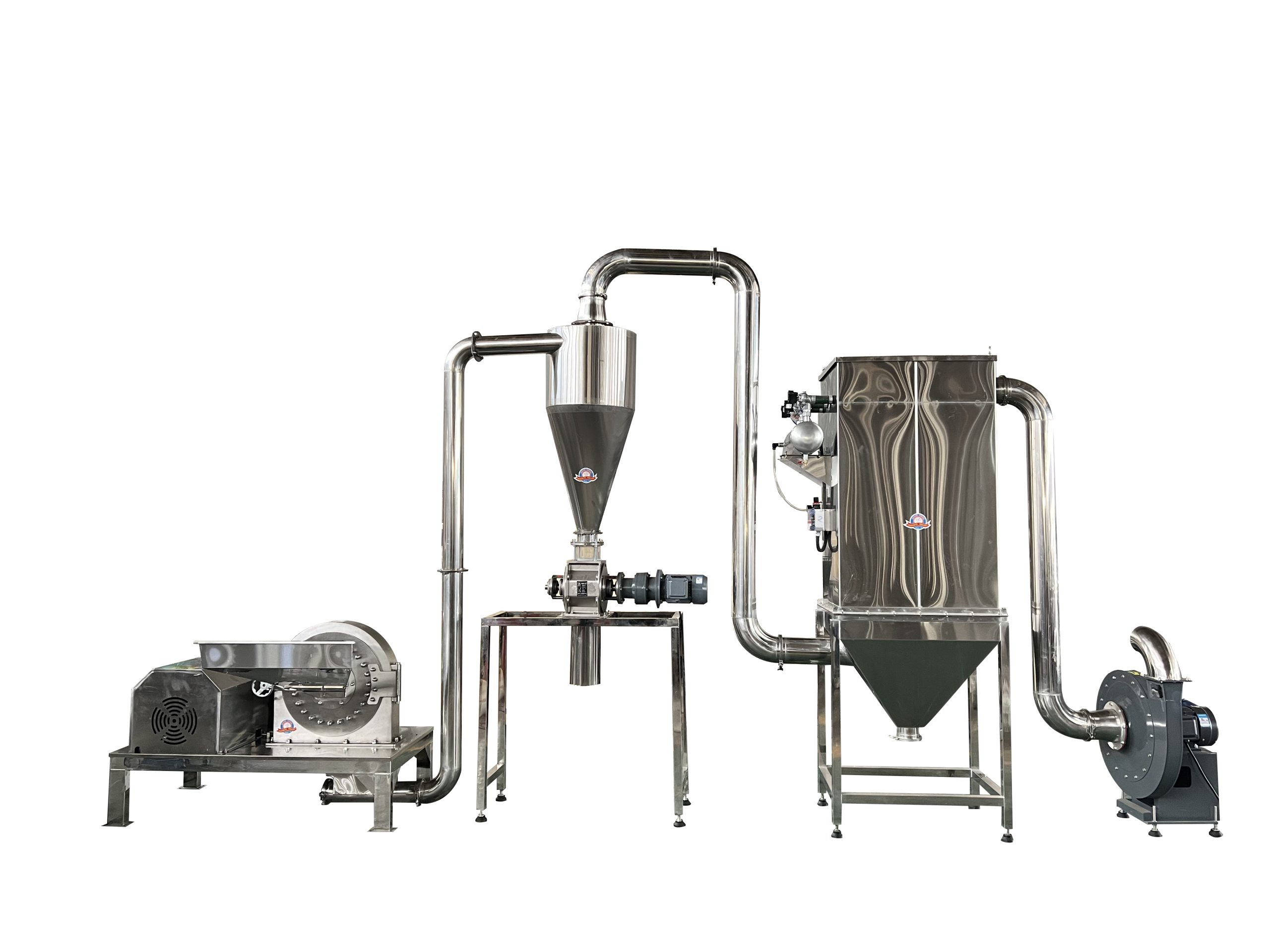
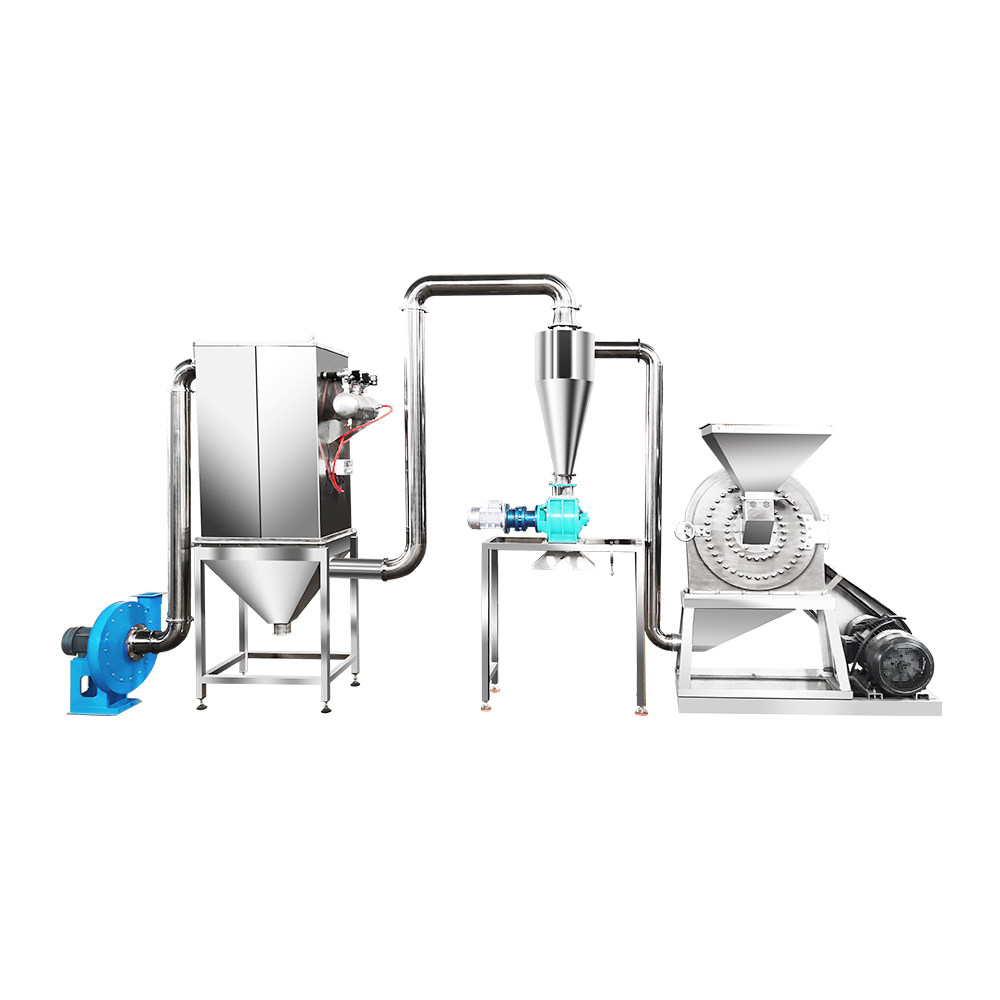
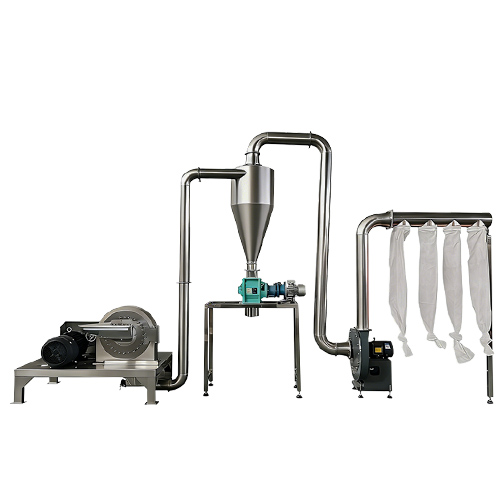
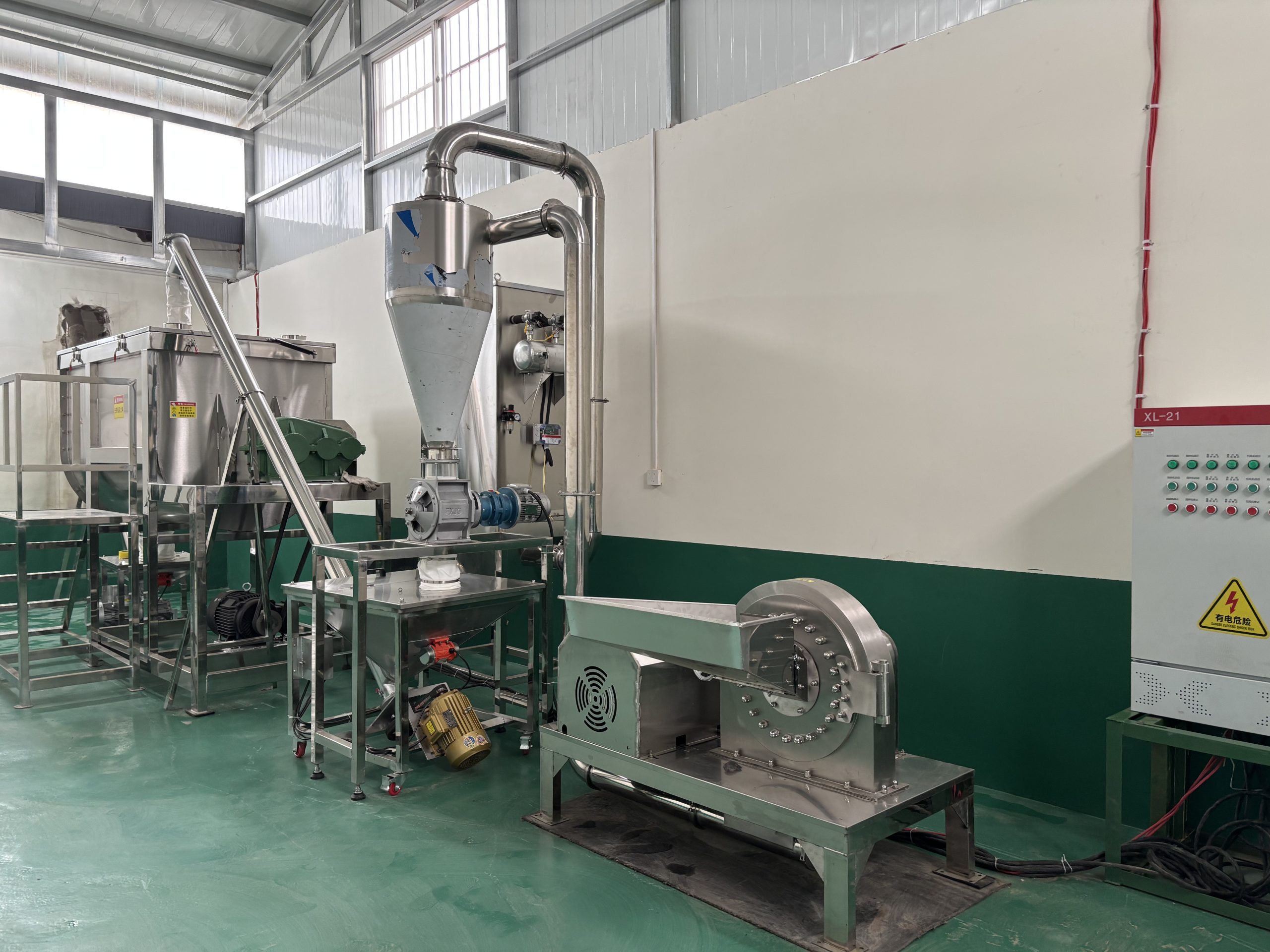
A stainless steel pin mill with a pulse dust collector is a production-scale grinding system that combines a hygienic grinding chamber and an on-board filtration unit. The pin mill reduces bulk solids into fine powder; the pulse dust collector captures airborne fines and automatically cleans its filter media with short bursts (“pulses”) of compressed air. The result is controlled dust emission, stable output and easier compliance with food/pharma hygiene standards.

Why choose stainless steel for the pin mill ?

O aço inoxidável (geralmente 304 ou 316L) é escolhido por várias razões práticas:

  • corrosion resistance and chemical inertness — important for food, spice, and pharmaceutical powders;
  • superfícies lisas que são fáceis de limpar e higienizar (reduz o risco de contaminação cruzada);
  • durabilidade sob tensão mecânica repetitiva e abrasão no processamento de abrasivos não extremos;
  • compatibilidade regulamentar para GMP, HACCP e quadros de higiene semelhantes quando é exigida qualidade alimentar ou farmacêutica.

How to adjust the output fineness of a pin mill?

The output fineness of our pin mills is primarily and precisely controlled by replacing screen meshes with different aperture sizes. The screen is installed at the outlet of the grinding chamber, allowing only particles smaller than the mesh openings to pass through. We offer a range of screens from 10 mesh to 120 mesh (and finer), enabling customers to easily switch between screens based on the particle size requirements of their final product. This simple and reliable mechanical sieving method ensures stable and controllable adjustment of output fineness.

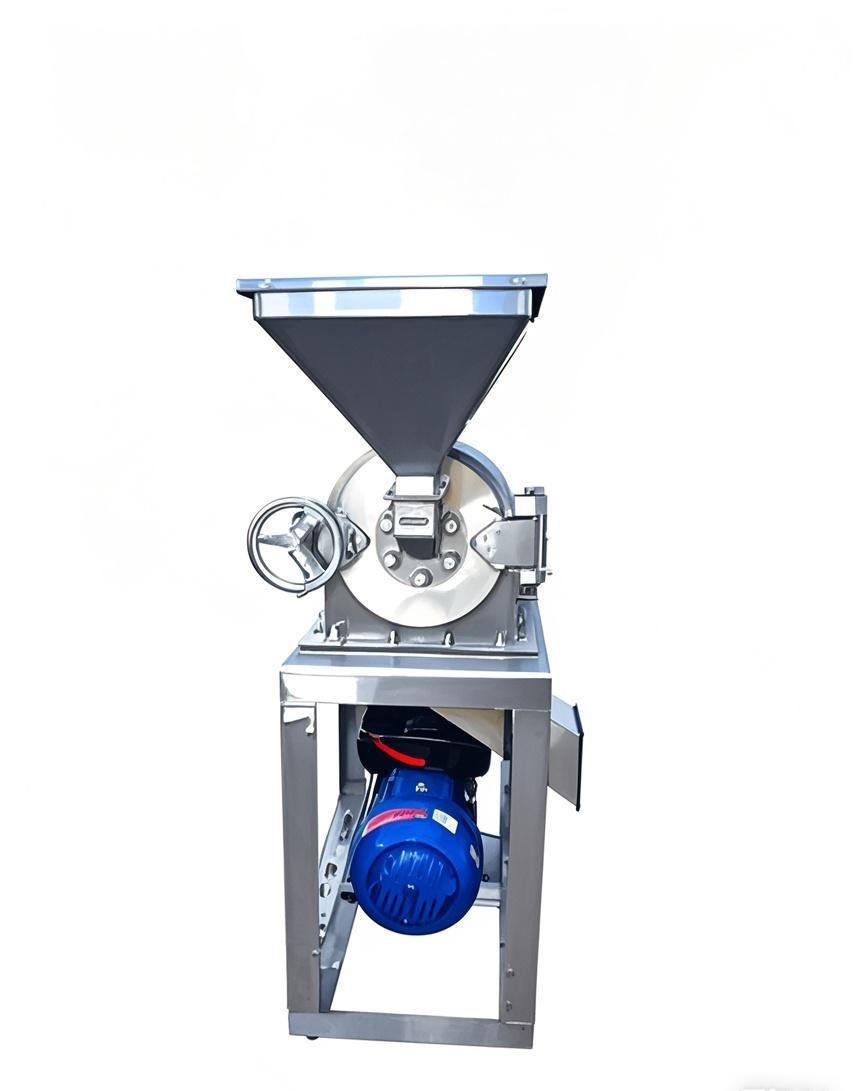
1. Standalone pin mill (stainless steel body)

  • Compacto, mais simples de operar, adequado para pequenos lotes ou utilização em laboratório.
  • Requer uma solução de gestão de poeiras separada se for necessário um controlo de poeiras.

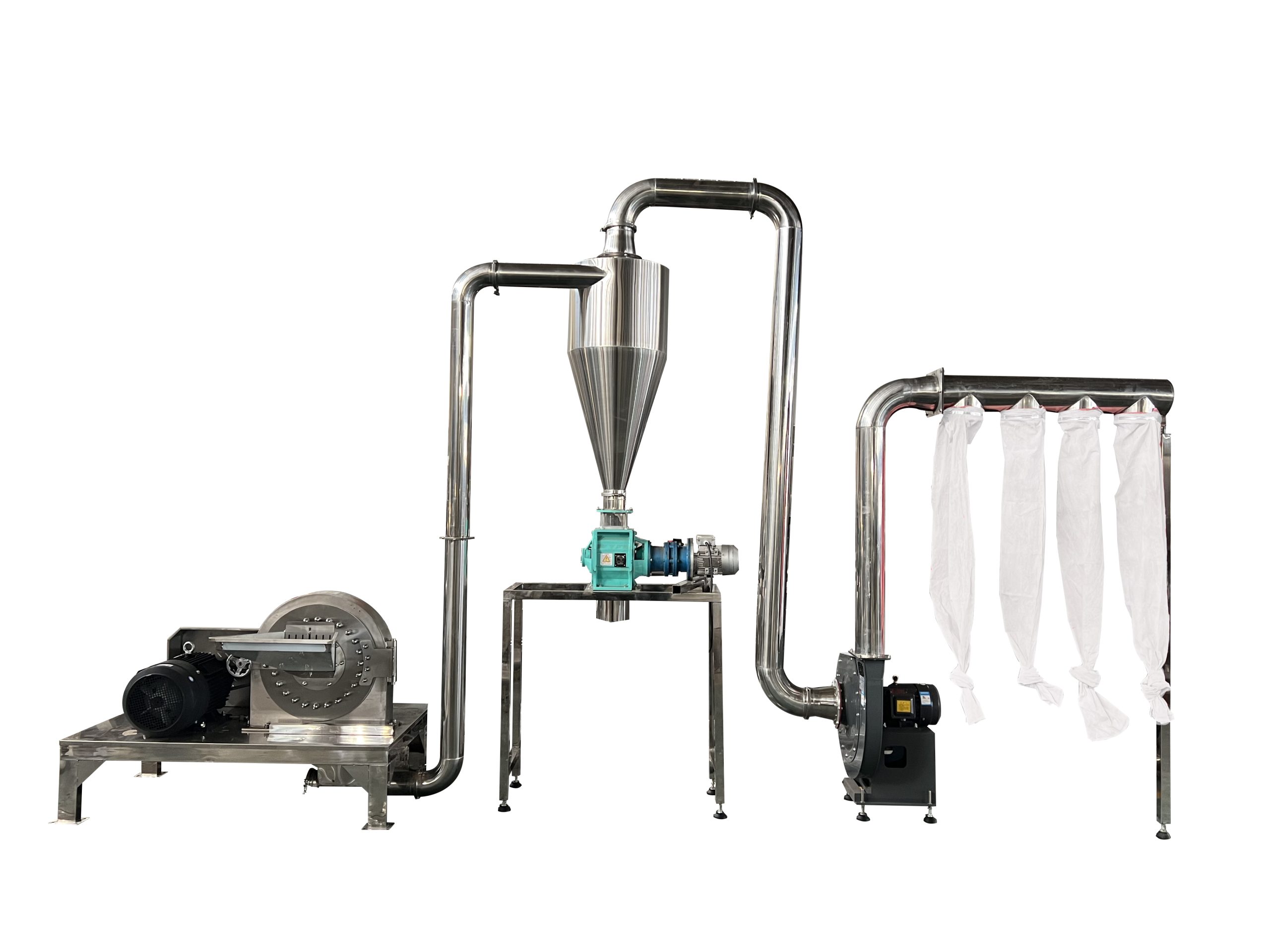
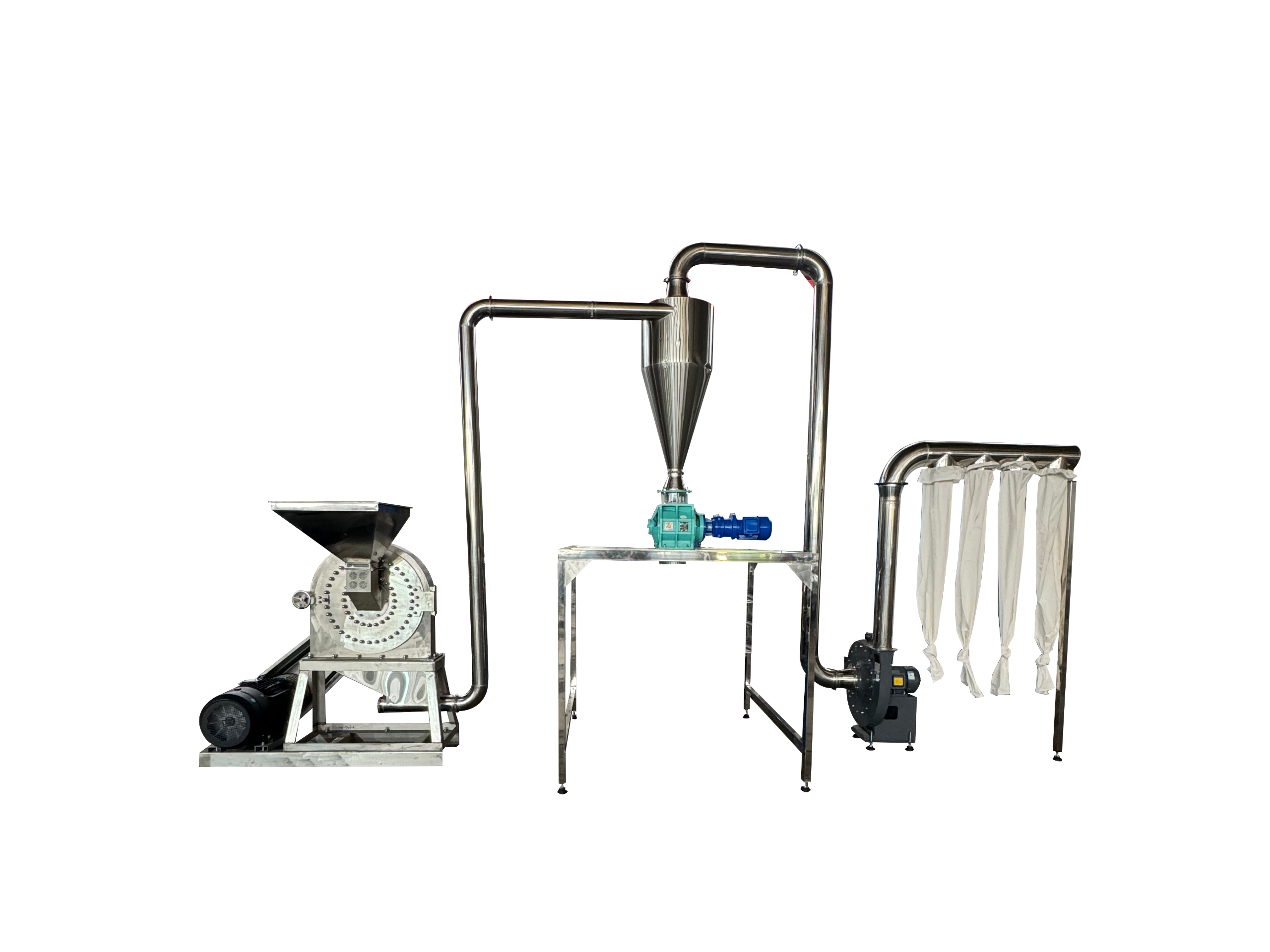
2. Integrated system: pin mill + cyclone + pulse dust collector

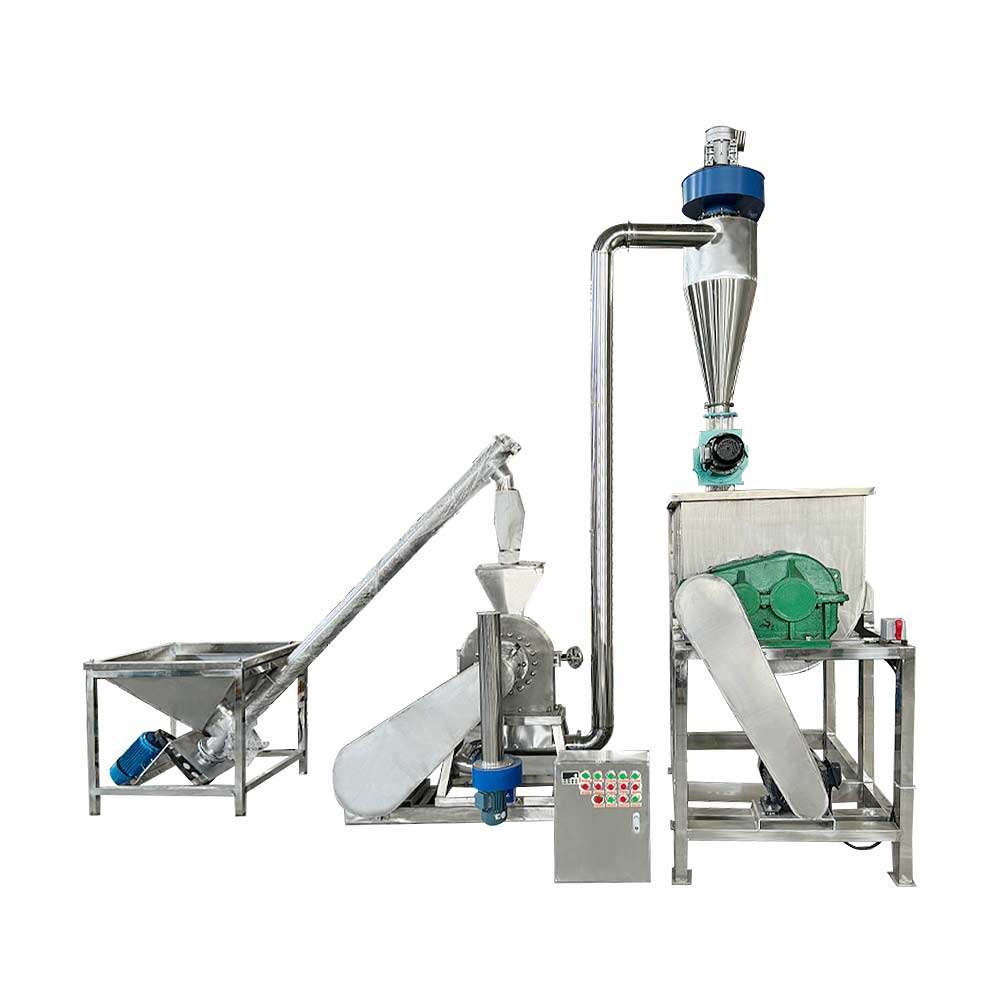
  • Frequentemente fornecidos como um único skid para uma instalação mais fácil e um funcionamento mais limpo da oficina.
  • Designed for continuous production: pulverizer → cyclone (coarse separation) → pulse jet baghouse (fine filtration).

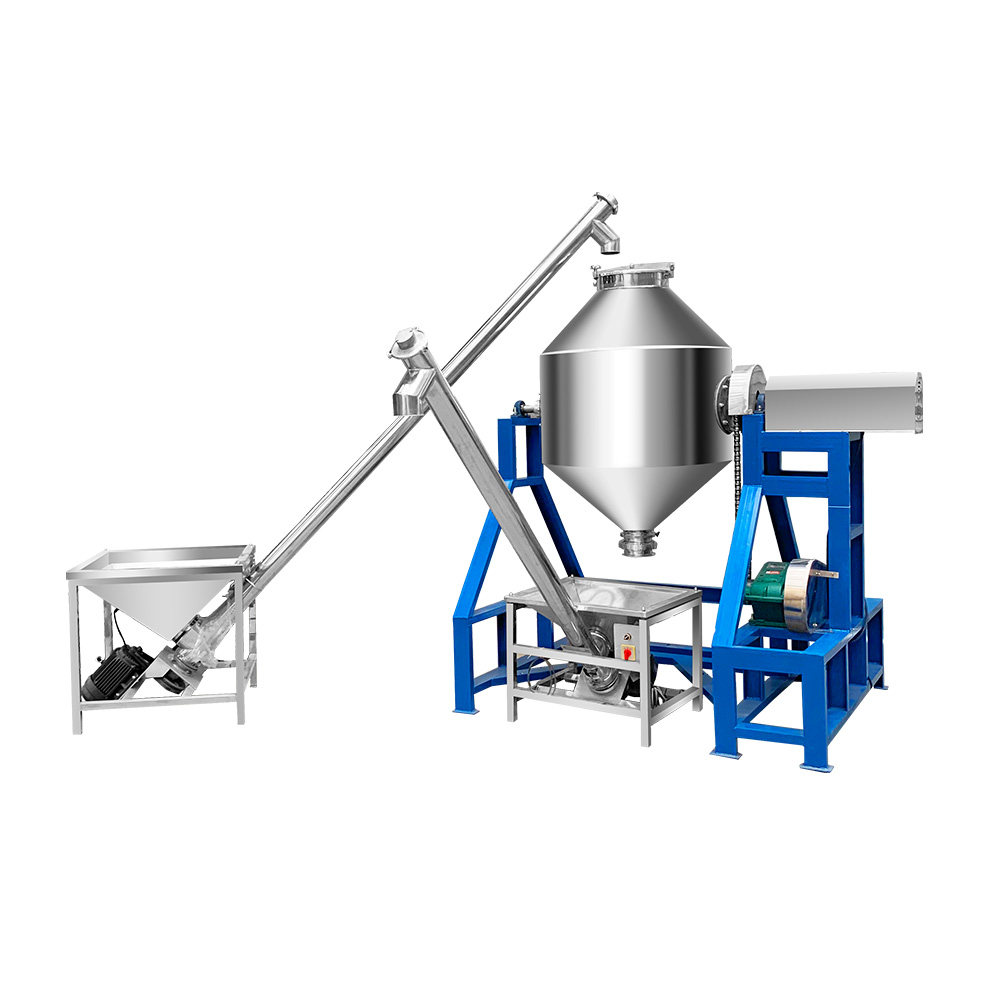
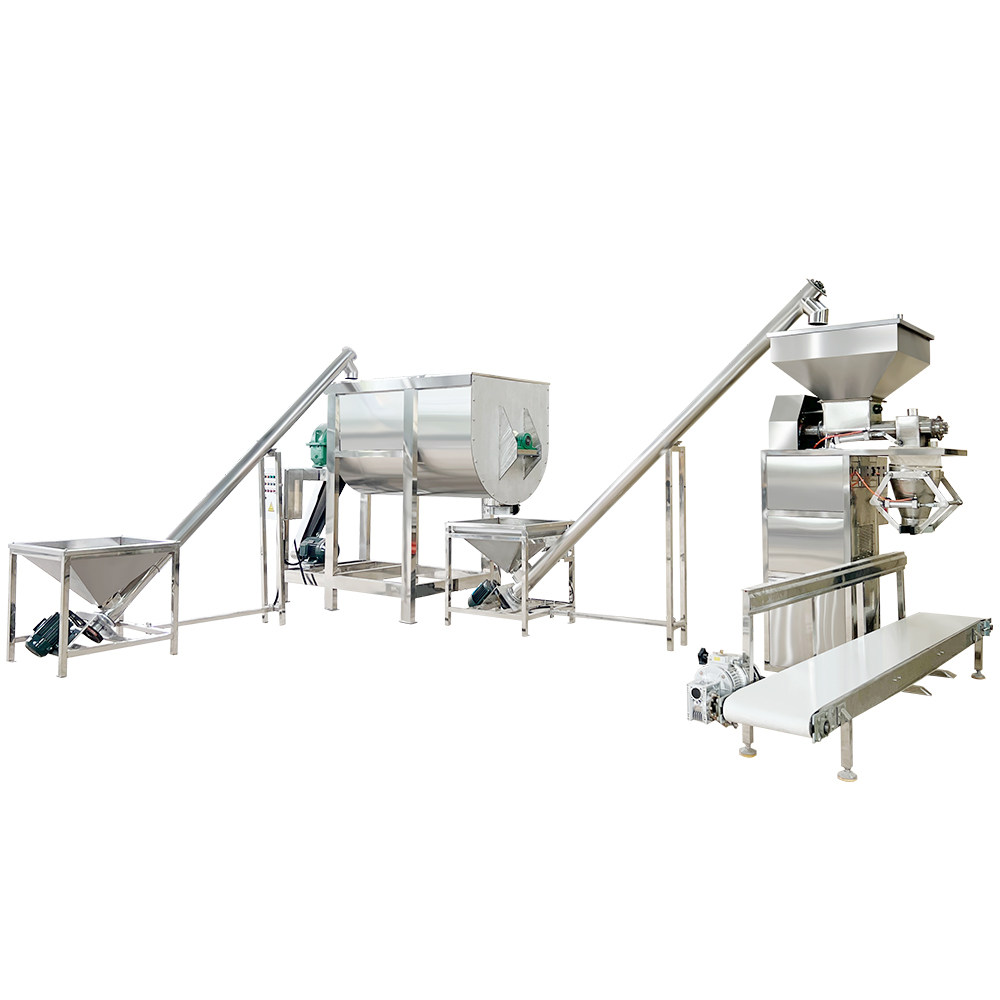
Complementos opcionais: tremonhas de alimentação com alimentadores controlados, peneiras vibratórias após a moagem, portas de amostragem e condutas totalmente em aço inoxidável para aplicações alimentares/farmacêuticas.

How does a pin mill machine work?

  1. Alimentação — material is fed into the pulverizing chamber via gravity or controlled feeder to ensure even throughput.
  2. Pulverization — high-speed rotors (blades/hammers/pins depending on design) impact and shear the material into smaller particles. Rotor speed and clearance control fineness.
  3. Primary separation — a cyclone or centrifugal separator removes coarse rejects and reduces the dust load on the filters.
  4. Filtration — the remaining fine dust-laden air passes through the pulse baghouse. Periodic compressed-air pulses dislodge cake build-up on filter bags; dust drops into the hopper below.
  5. Exhaust & recirculation — cleaned air is exhausted, and collected product is discharged for sieving or packaging. The closed loop reduces product loss and contamination.
<trp-post-container data-trp-post-id='3787'>Pin Mills</trp-post-container>(images 13)

Quais são as especificações técnicas típicas?

  • Capacidade: 30–300 kg/h (scalable modules available)
  • Final particle size: 20–120 mesh (adjustable)
  • Material: Stainless steel 304 / optional 316L for contact parts
  • Drive: IE2/IE3 motor, frequency inverter optional for speed control
  • Dust collector type: Pulse-jet baghouse with PLC-controlled cleaning cycle
  • Power consumption: depends on capacity and rotor design (specify after feed test)
  • Options: GMP polishing, CIP-friendly design, ATEX classification for combustible dust zones (if required)

Technical Parameters

ModeloSize (mm)PowerTensãoWeight (kg)Crushing Fineness (mesh)Throughput (kg/h)
2004060 × 800 × 27502.2 kW220V47110 – 12030 – 50
3004160 × 800 × 27504 kW380V51510 – 12060 – 150
4004850 × 930 × 27507.5 kW380V56510 – 120200 – 400
5004900 × 1000 × 275011 kW380V65810 – 120300 – 500
6005000 × 990 × 275015 kW380V71010 – 120400 – 600
8005380 × 1150 × 293022 kW380V89810 – 120500 – 1000
10005500 × 1170 × 316030 kW380V120010 – 120800 – 1200

Onde é que este equipamento foi aplicado com sucesso?

  • Spice milling (Southeast Asia) — chili, turmeric, coriander: systems sized 150–250 kg/h with full stainless ducting for food safety.
  • Pharmaceutical herbal extracts (Central Asia) — 50–120 kg/h GMP-compliant lines for capsule and tablet feedstock.
  • Food additives & grain powder (Africa) — 200–300 kg/h lines paired with sieving and packaging modules to reduce manual handling and dust exposure.

O que deve ter em conta antes de investir?

  • Raw material characteristics — moisture, oil content, hardness and abrasiveness all change mill selection and maintenance schedule.
  • Target particle size and distribution — tight particle specs may require multi-stage grinding + classification.
  • Throughput requirement — peak vs average throughput affects feeder and motor sizing.
  • Hygiene and certification needs — food/pharma will need polished finishes, sanitary fittings and traceability.
  • Dust hazard — combustible dust requires special measures (inerting, grounding, ATEX compliance).
  • Total cost of ownership — include spare parts, filter bags, energy and expected wear items in the calculation.

Que sectores e aplicações se adequam a este sistema?

  • Food & spices (ground spices, sugar, starch)
  • Pharmaceuticals (herbal powders, excipients)
  • Chemicals (pigments, catalysts, coatings)
  • Agriculture (feed additives, fertilizer fines)
  • Any application needing fine, clean powder with low cross-contamination risk
<trp-post-container data-trp-post-id='3787'>Pin Mills</trp-post-container>(images 14)

Que vantagens oferece o pulverizador combinado com o coletor de pó por impulsos?

  • Cleaner workshop environment — significant reduction of airborne dust.
  • Higher yield — less product lost to exhaust and better capture of fines.
  • Improved product quality — more uniform particle size and less contamination.
  • Lower operator exposure — safer working conditions and easier compliance.
  • Simplified maintenance — pulse cleaning reduces manual filter cleaning and downtime.
<trp-post-container data-trp-post-id='3787'>Pin Mills</trp-post-container>(images 15)
<trp-post-container data-trp-post-id='3787'>Pin Mills</trp-post-container>(images 16)

How can users extend the machine’s service life?

  • Operate within the specified feed size, moisture and load limits.
  • Establish a regular inspection regime for wear parts (rotors, liners, screens).
  • Replace filter media on a life-cycle schedule and check pulse valves periodically.
  • Keep bearings and drives correctly lubricated; follow manufacturer torque and preload specs.
  • Maintain a controlled feeding method — avoid tramp metal and large lumps.
  • Train operators on start/stop procedures, emergency stops and safe cleaning methods.

How to solve overheating in a pin mill? Which cooling solution is better?

To address grinding temperature rise, we offer both rear-mounted high-power fans and water-cooling systems, with a strong recommendation for the former. The key advantage lies in the dual function of our rear fan:

1) Efficient Cooling: The airflow directly removes frictional heat from the grinding chamber, providing significant and uniform temperature reduction.

2) Smooth Discharge: The airflow actively propels and conveys the ground material out of the chamber, effectively preventing fine powder from lingering or clogging.

This integrated “cooling + conveying” design is superior to passive water-cooling in preserving the material’s original color and aroma, while also offering a simpler and maintenance-free setup.

Este sítio Web utiliza cookies para melhorar a sua experiência de navegação. Ao continuar a utilizar este sítio, o utilizador aceita a utilização dos nossos cookies. Os dados recolhidos neste sítio Web são processados e armazenados nos Estados Unidos.

Já está!