 Soluções de Processamento de Pó - Pulverizadores, Moedores e Misturadores | Pcreate Machinery
Enviar-nos uma mensagem
Gostaríamos de o ouvirEnvie a sua pergunta e a nossa equipa responderá ao e-mail fornecido o mais rapidamente possível.
Pesquisar toda a estação
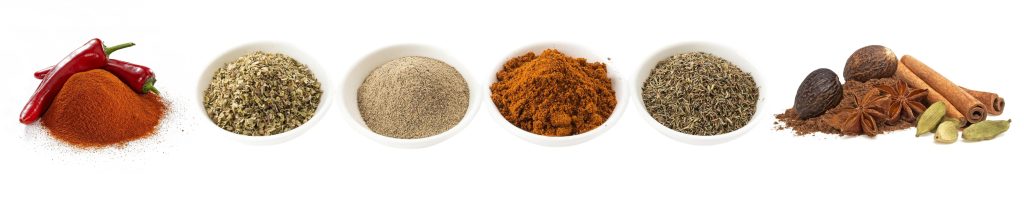
The grinding machine can crush Chili, pepper, black pepper, white pepper, green pepper, cinnamon, cumin, bandits, Dahongpao pepper, cinnamon,nutmeg, cardamom, red yeast rice, red pepper, garlic, star anise, cloves, Amomum Tsaoko, geraniol, turmeric, ginger, fennel, anise,angelica and other material with high content of oil or tiber. Besides, the material can be fed into the machine directly without coarse crushing. The grinding machine has the features of big capacity, not changing the color, maintaining the physicochemical characteristics of the material.
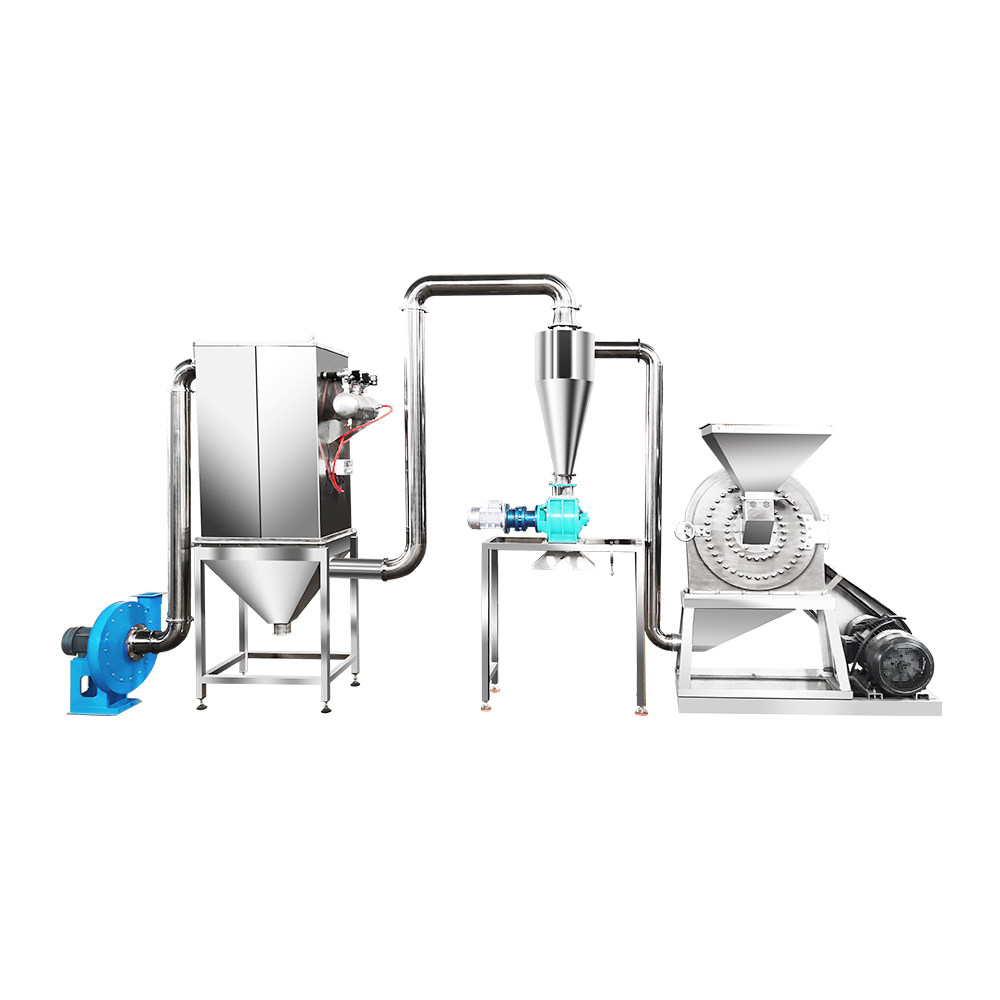
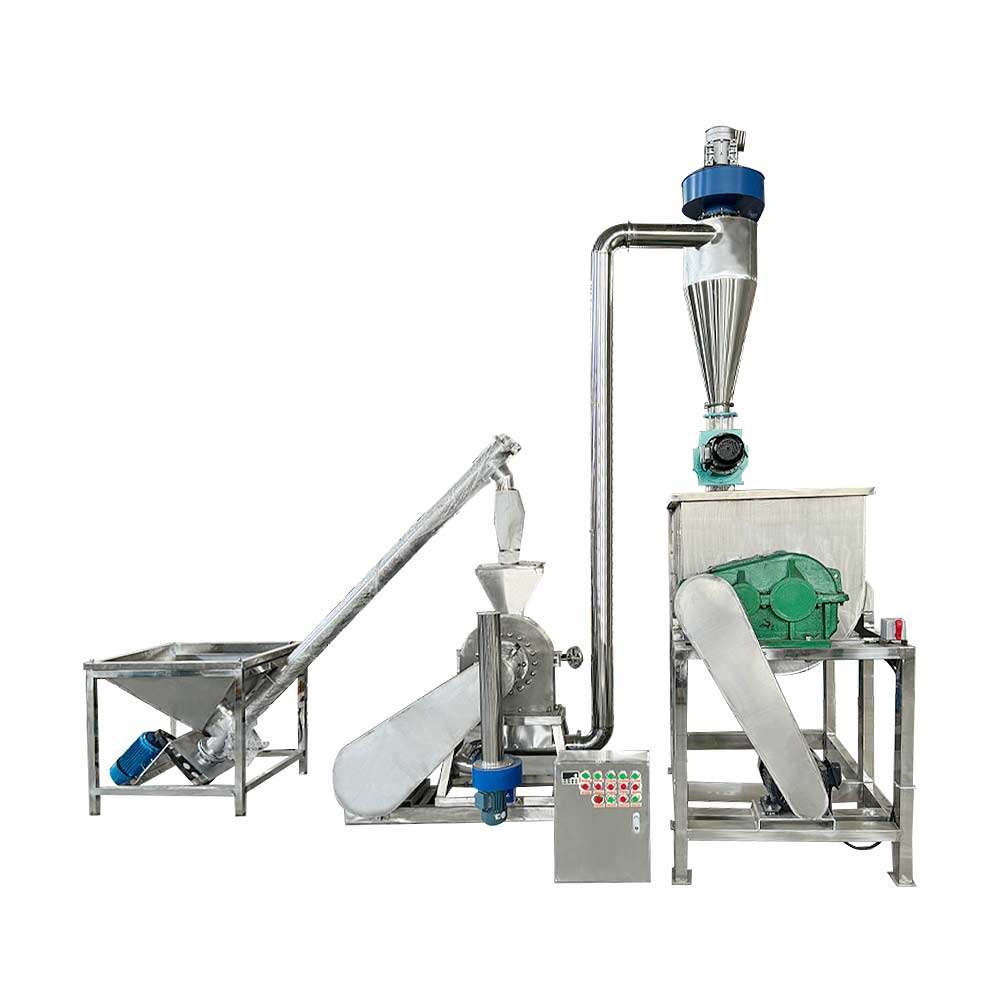
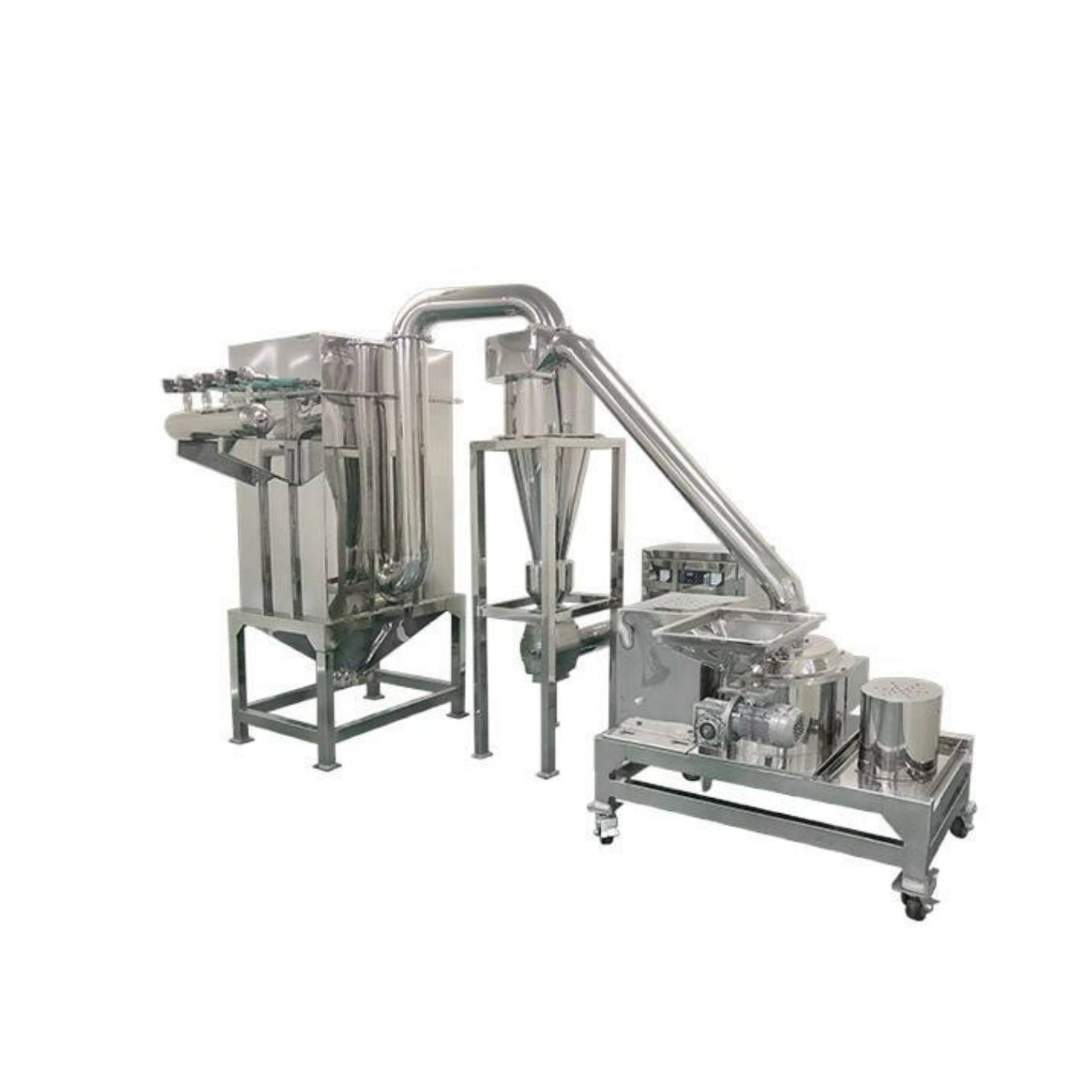
Ultrafine Pulverizer is composed of a hammer host, an ultramicro host, a cyclone separator, and an impulse dust box.
Compact design, compared to the micro-grinding unit, more pre-processing hammer for coarse crushing, so that large particles of material can be directly crushed, continuous crushing process, no dust.
Fine powder trapped by dust traps can be effectively recovered, reducing the material loss rate.
The material enters the grinding chamber via the funnel and spiral conveyor where it is sheared and broken by the fast-rotating blades.
The powder passes the guide ring and enters the classification chamber.
As the classification wheel is in revolution, both the air force and centrifugal force act on the powder.
As the particles whose diameters are greater than the critical diameter (diameter of the classification particles) have a great mass, they are thrown back into the grinding chamber to be ground again, while the particles whose diameters are smaller than the critical diameter enter the cyclone separator and bag-type collector via the material exit pipe by means of negative pressure wind conveyance.
The discharge material meets the requirement for the product.
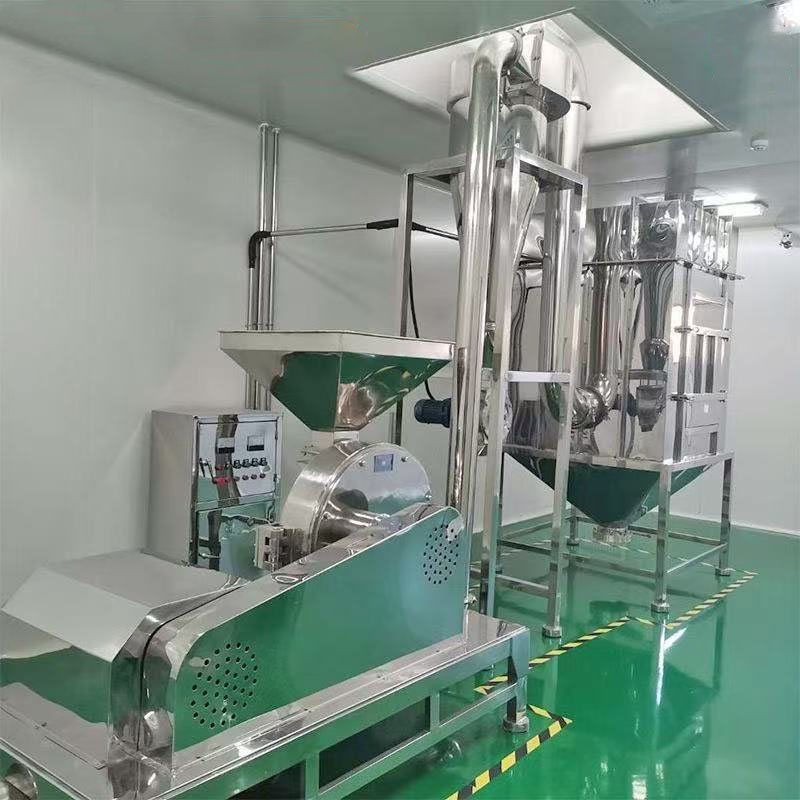
An ultrafine pulverizer is a precision grinding machine engineered to reduce materials into fine powders with particle sizes ranging from microns (µm) to sub-microns. It is a cornerstone technology in advanced manufacturing sectors such as pharmaceuticals, new energy battery materials, high-performance chemicals, and functional foods.
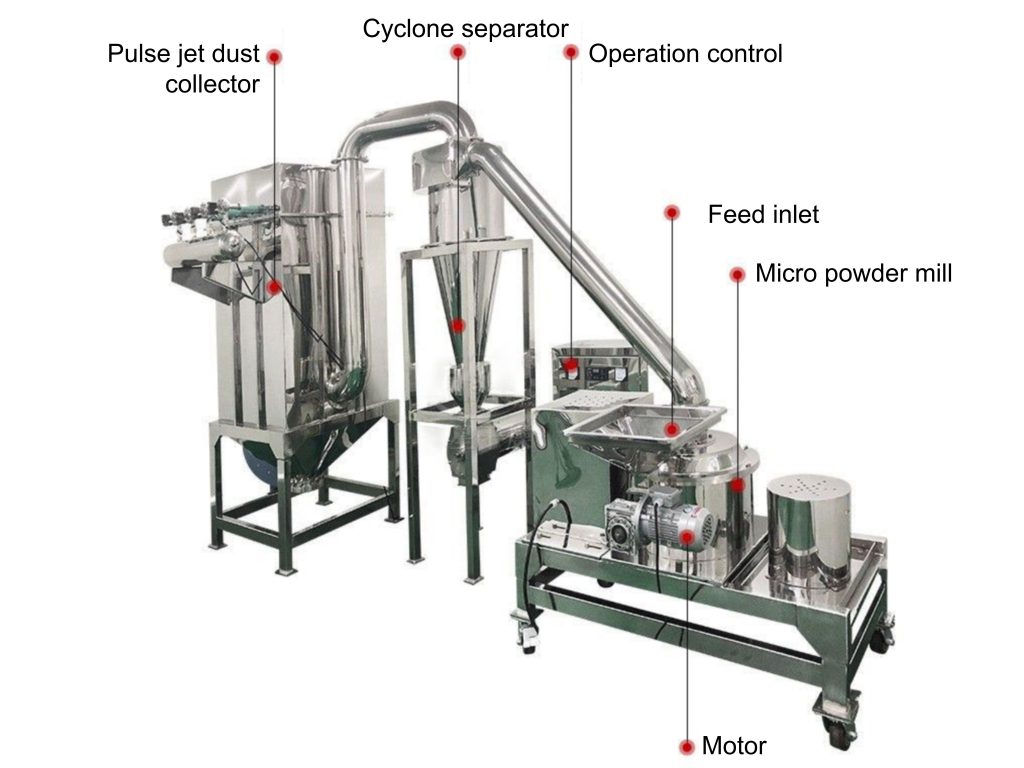
Its critical role lies in unlocking material properties and adding value. By achieving a uniform, ultra-fine particle size, it can significantly enhance product characteristics like bioavailability of drugs, reactivity of chemicals, dispersibility of pigments, and texture of food ingredients. This translates directly to superior end-product performance, process efficiency, and competitive advantage in the market.
Used in food additives, baking ingredients, pharmaceutical intermediate, health food, chemical raw materials and other industries.
Yes, cleaning convenience is one of our core design considerations.
We offer multiple options: the device can be designed as a fully enclosed structure; Equipped with an integrated bag filter or filter dust collector as an optional accessory.
Mechanical crushing does indeed generate heat. For heat sensitive materials, we offer multiple cooling solutions:
The lifespan depends on the hardness and abrasion resistance of the material. For high hardness materials, we provide vulnerable parts made of advanced materials such as wear-resistant alloys and tungsten carbide to greatly extend their service life and reduce maintenance costs.
We maintain inventory of commonly used spare parts and can ship them quickly. You can place an order directly through your sales representative. We provide original spare parts drawings and lists for your convenience in management.
We provide 7×24 hour technical hotline support. For urgent issues, our engineers will first provide remote guidance through phone/video calls to resolve them. If it cannot be resolved, we will arrange engineers to go to the site as soon as possible according to the situation.
Este sítio Web utiliza cookies para melhorar a sua experiência de navegação. Ao continuar a utilizar este sítio, o utilizador aceita a utilização dos nossos cookies. Os dados recolhidos neste sítio Web são processados e armazenados nos Estados Unidos.
 English English
  Japanese
 Korean
 Russian
 Spanish
 French
 Portuguese
 Indonesian
 Myanmar
 Thai
Thai
 Vietnamese
 Arabic