 Powder Processing Solutions – Pulverizers, Grinders & Mixers | Pcreate Machinery



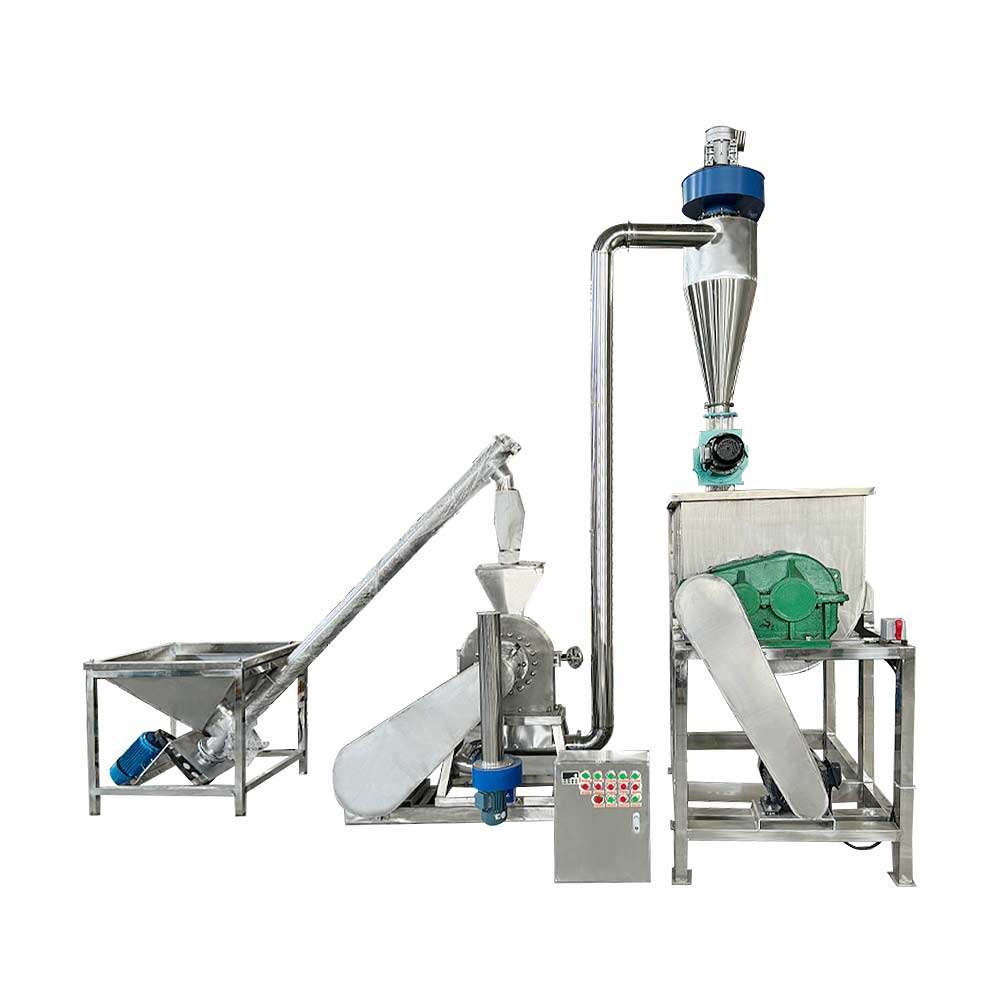
Send us a message
We would love to hear from youSubmit your question and our team will respond to the email provided as soon as possible.
Search the whole station
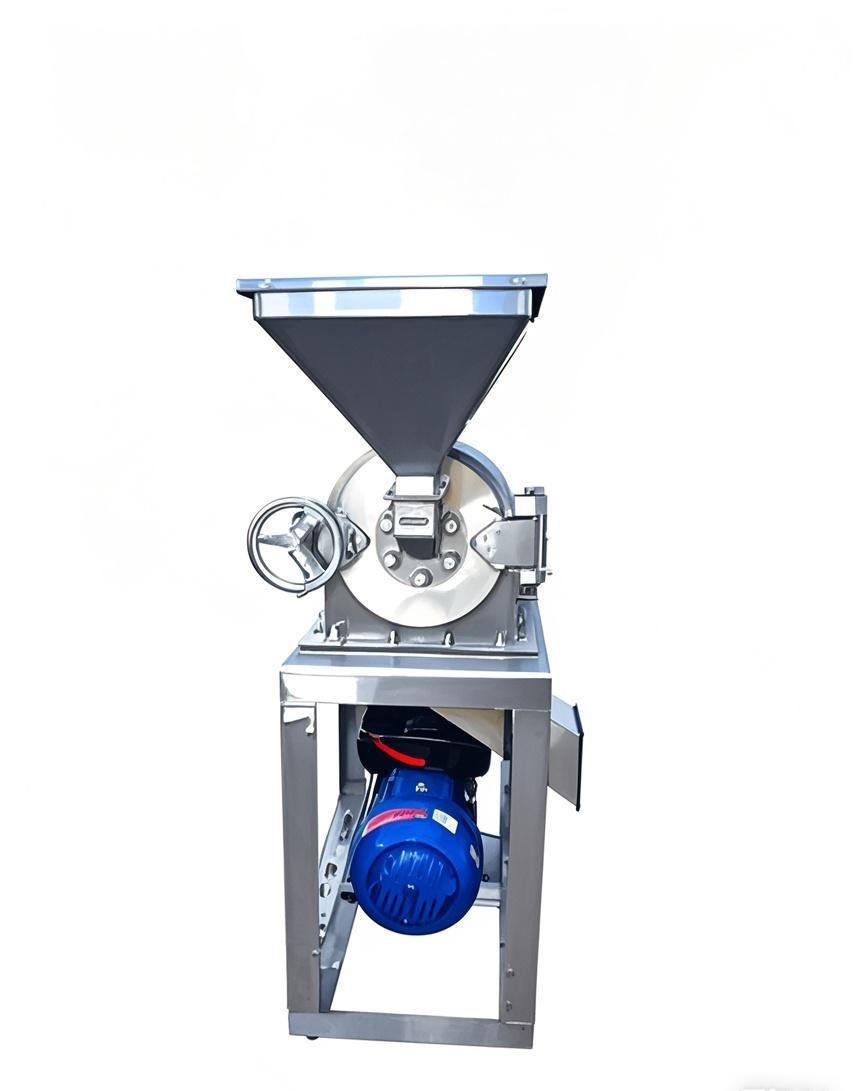
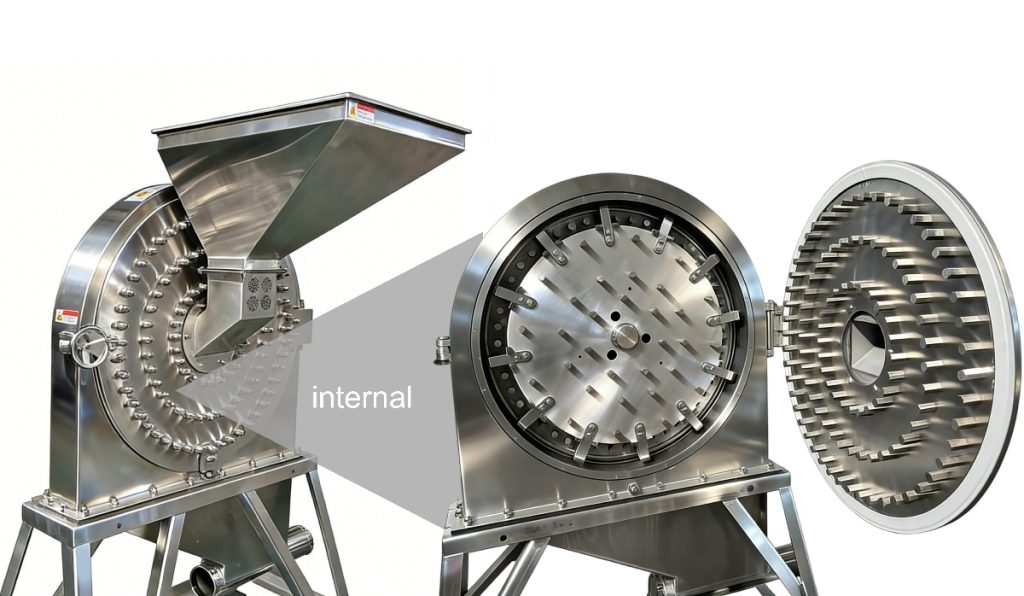
A pin mill is a type of industrial grinding machine that uses high-speed rotating discs fitted with rows of intermeshing pins to reduce materials into fine powders through repeated impact and shearing
It works by using two discs fitted with multiple pins—one rotating at high speed and the other stationary or counter-rotating. When material enters the grinding chamber, it is broken down by impact and shear forces generated between the pins.
Pin mills are widely used because they offer:Uniform particle size;High grinding efficiency;Low heat generation;Continuous operation
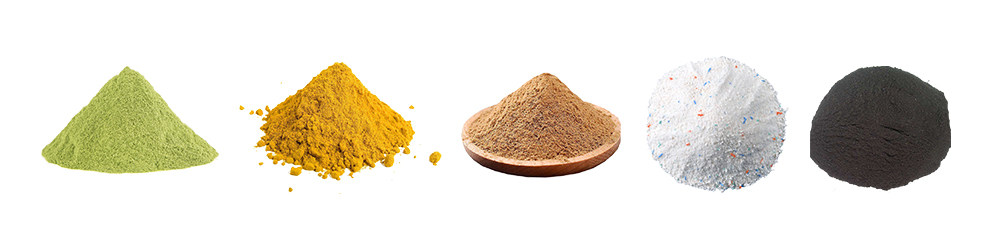
They are commonly applied in the food, pharmaceutical, chemical, and mineral industries, especially for materials such as spices, sugar, salt, chemicals, and powders that require precise fineness control.
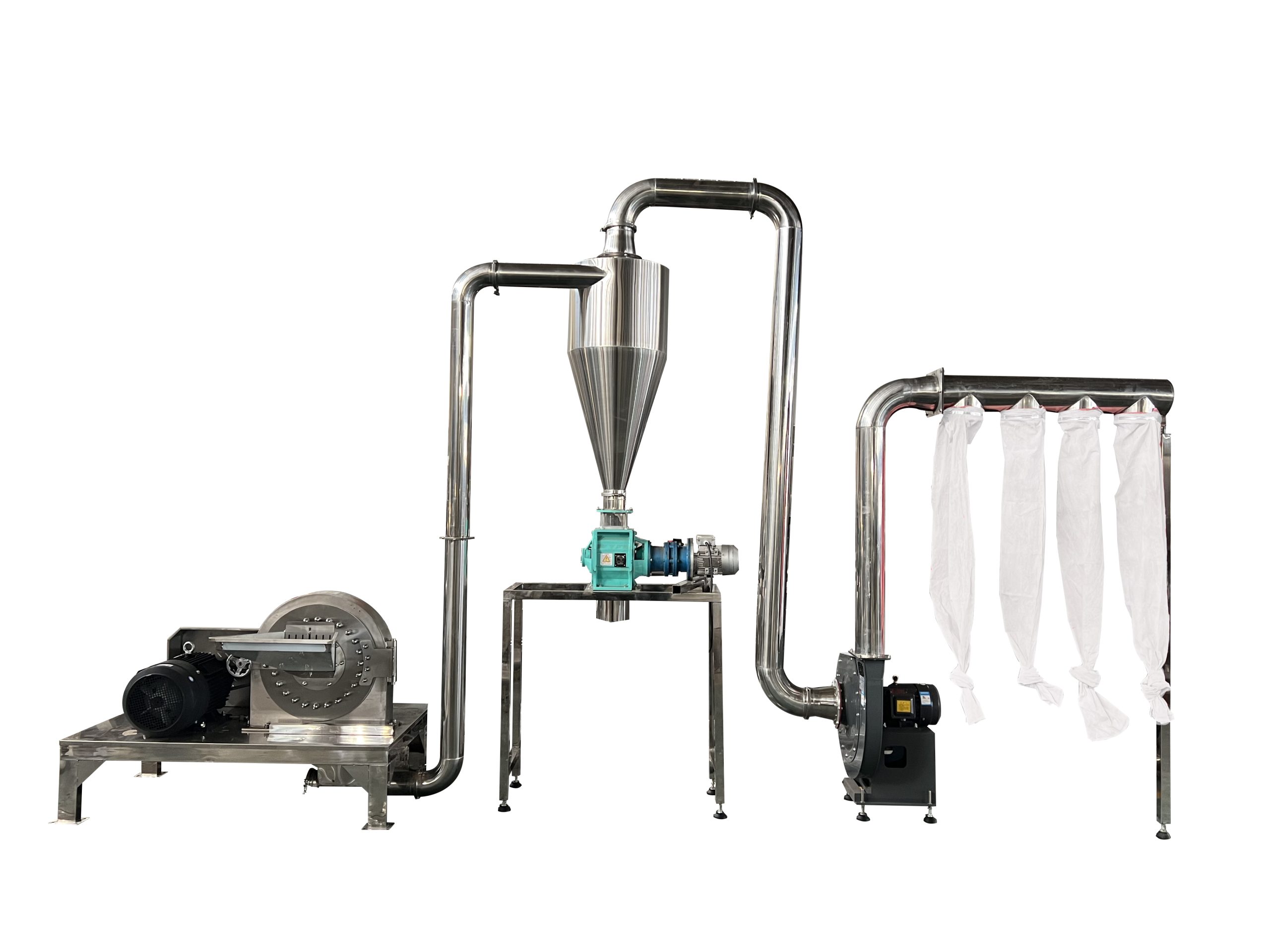
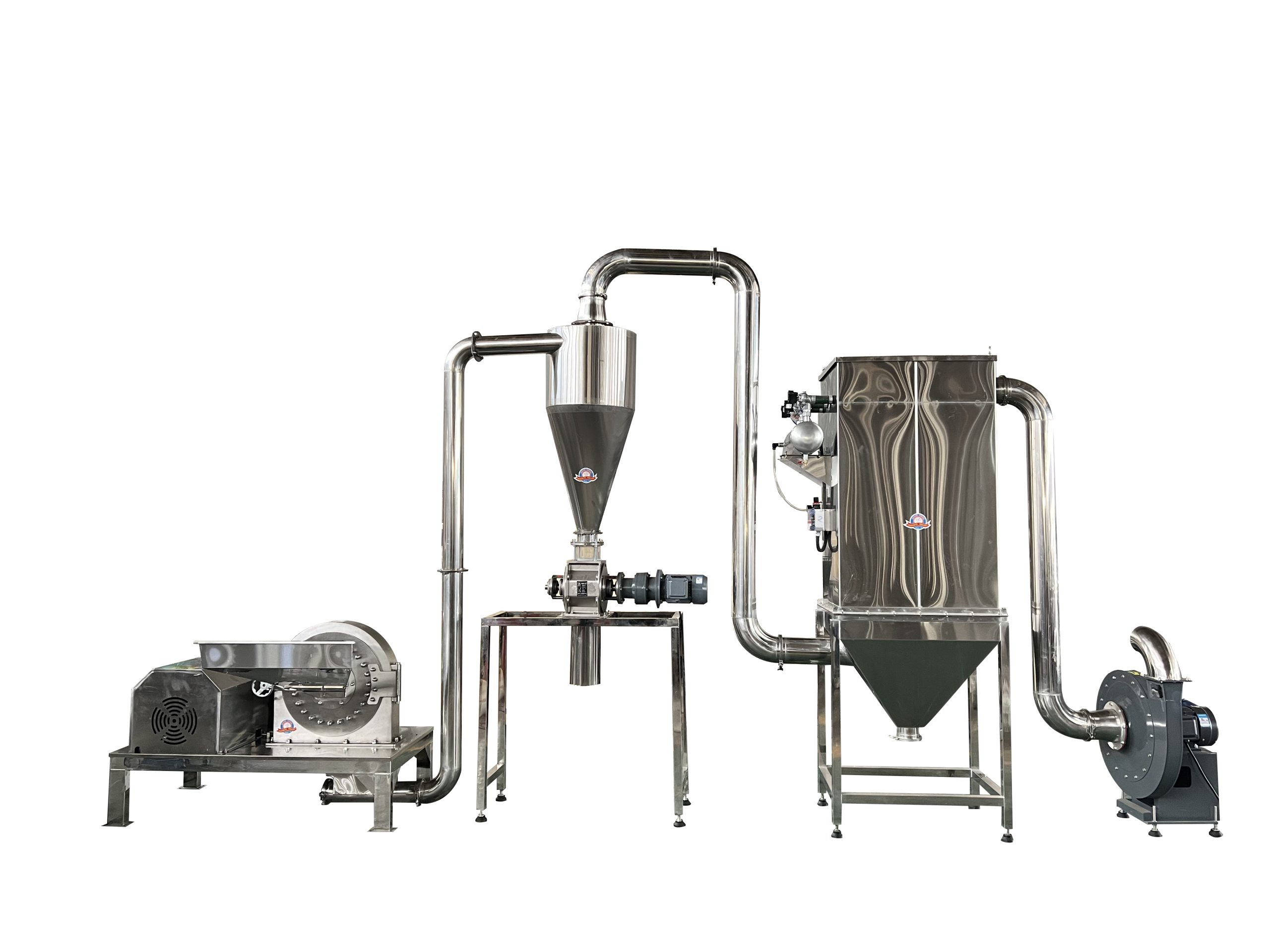
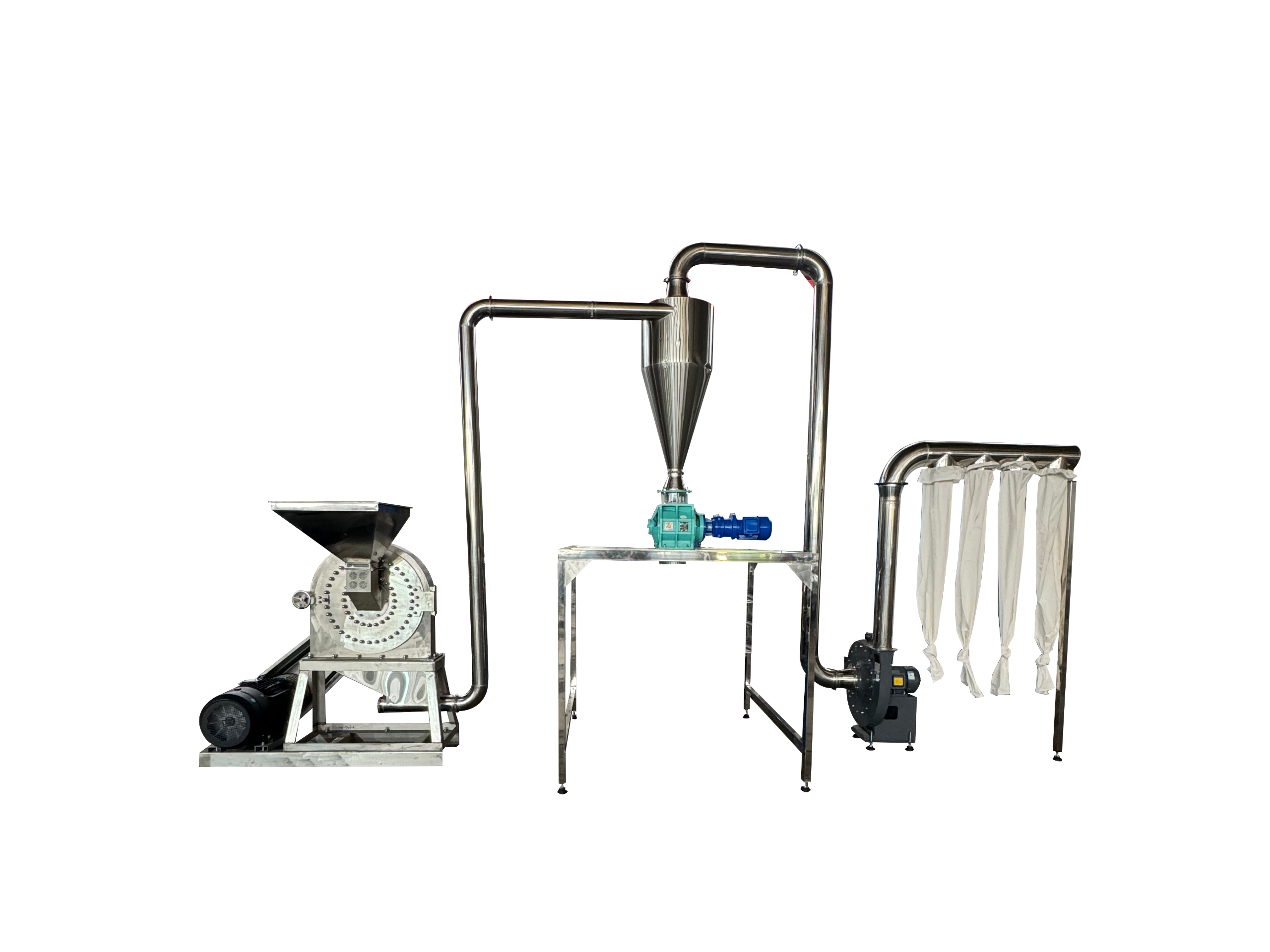
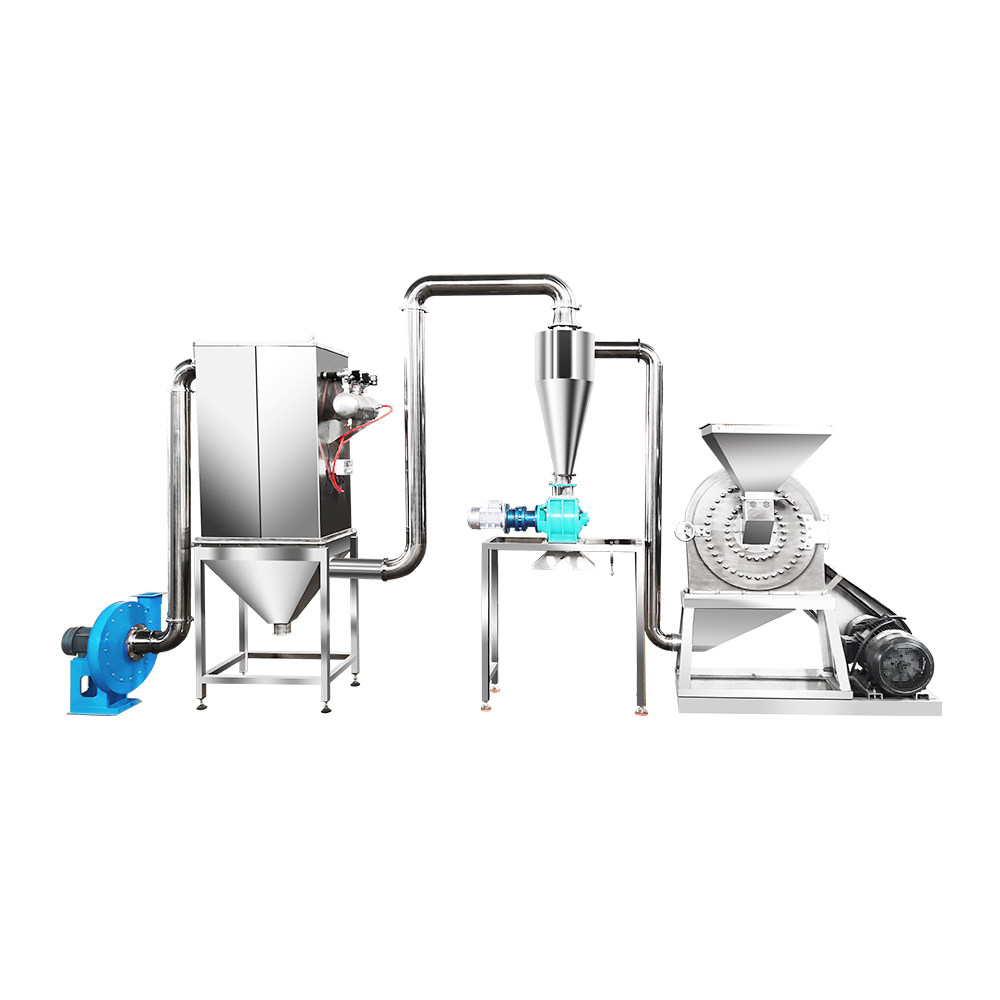
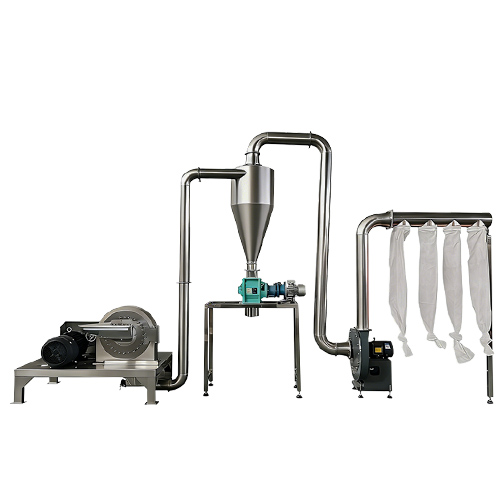
A stainless steel pin mill with a pulse dust collector is a production-scale grinding system that combines a hygienic grinding chamber and an on-board filtration unit. The pin mill reduces bulk solids into fine powder; the pulse dust collector captures airborne fines and automatically cleans its filter media with short bursts (“pulses”) of compressed air. The result is controlled dust emission, stable output and easier compliance with food/pharma hygiene standards.
Stainless steel (commonly 304 or 316L) is chosen for several practical reasons:
The output fineness of our pin mills is primarily and precisely controlled by replacing screen meshes with different aperture sizes. The screen is installed at the outlet of the grinding chamber, allowing only particles smaller than the mesh openings to pass through. We offer a range of screens from 10 mesh to 120 mesh (and finer), enabling customers to easily switch between screens based on the particle size requirements of their final product. This simple and reliable mechanical sieving method ensures stable and controllable adjustment of output fineness.
1. Standalone pin mill (stainless steel body)
Optional add-ons: feed hoppers with controlled feeders, vibratory sieves after grinding, sample ports, and full stainless ducting for food/pharma applications.

| Model | Size (mm) | Power | Voltage | Weight (kg) | Crushing Fineness (mesh) | Throughput (kg/h) |
|---|---|---|---|---|---|---|
| 200 | 4060 × 800 × 2750 | 2.2 kW | 220V | 471 | 10 – 120 | 30 – 50 |
| 300 | 4160 × 800 × 2750 | 4 kW | 380V | 515 | 10 – 120 | 60 – 150 |
| 400 | 4850 × 930 × 2750 | 7.5 kW | 380V | 565 | 10 – 120 | 200 – 400 |
| 500 | 4900 × 1000 × 2750 | 11 kW | 380V | 658 | 10 – 120 | 300 – 500 |
| 600 | 5000 × 990 × 2750 | 15 kW | 380V | 710 | 10 – 120 | 400 – 600 |
| 800 | 5380 × 1150 × 2930 | 22 kW | 380V | 898 | 10 – 120 | 500 – 1000 |
| 1000 | 5500 × 1170 × 3160 | 30 kW | 380V | 1200 | 10 – 120 | 800 – 1200 |
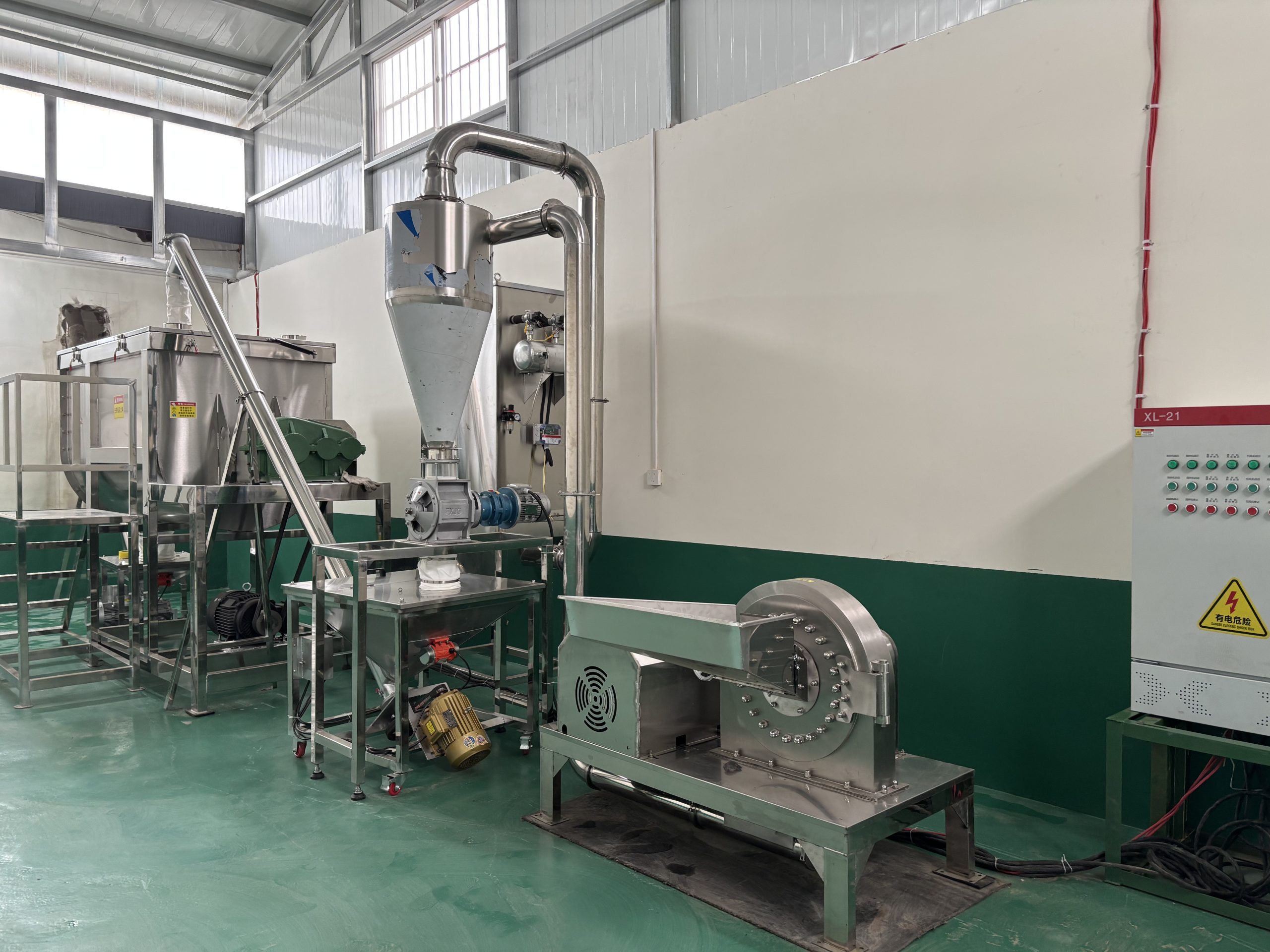

How to solve overheating in a pin mill? Which cooling solution is better?
To address grinding temperature rise, we offer both rear-mounted high-power fans and water-cooling systems, with a strong recommendation for the former. The key advantage lies in the dual function of our rear fan:
1) Efficient Cooling: The airflow directly removes frictional heat from the grinding chamber, providing significant and uniform temperature reduction.
2) Smooth Discharge: The airflow actively propels and conveys the ground material out of the chamber, effectively preventing fine powder from lingering or clogging.
This integrated “cooling + conveying” design is superior to passive water-cooling in preserving the material’s original color and aroma, while also offering a simpler and maintenance-free setup.
This website uses cookies to improve your browsing experience. By continuing to use this site, you accept the use of our cookies. Data collected from this website is processed and stored in the United States.
 English English
  Japanese
 Korean
 Russian
 Spanish
 French
 Portuguese
 Indonesian
 Myanmar
 Thai
Thai
 Vietnamese
 Arabic